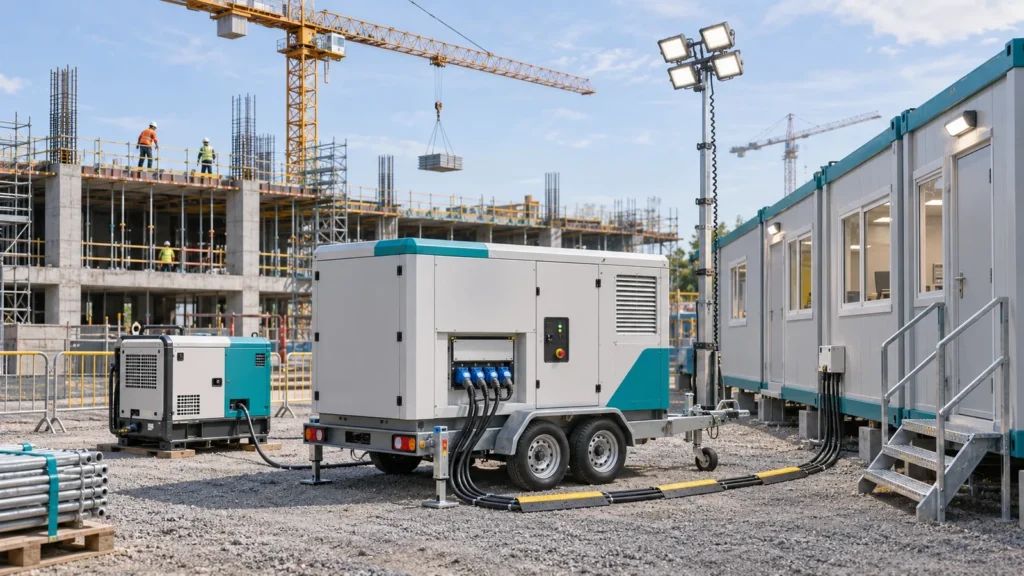
In short: construction sites can cut diesel use, emissions and noise by replacing or supplementing generators with battery power units, early grid connections and hybrid systems. Start by measuring the real site load, which is often well below the generator’s rating for much of the day. Then match the power source to each phase of the project. Rules are tightening: in London, generators must already meet the Stage V engine standard, and the city plans to allow only zero-emission machinery from 2040.
Temporary power is one of the most visible sources of emissions on a construction site, and one of the easiest to tackle. The industry’s own decarbonisation programme, CO2nstructZero, lists “zero diesel sites” among its priorities. This article sets out the options and how to plan them.
Why is site power changing?
- Cost: most sectors, including construction, lost the right to use rebated red diesel from April 2022, so generator fuel costs more than it did.
- Rules: London’s rules for non-road mobile machinery cover engines from 37 kW to 560 kW. The Greater London Authority says generators need to meet Stage V, that Stage V will apply to all machinery across London from 2030, and that only zero-emission machinery will be allowed from 2040.
- Neighbours and clients: quieter, cleaner sites reduce complaints and help win work with clients who set carbon targets.
What are the options?
| Option | Best for | Watch out for |
|---|---|---|
| Early grid connection | Longer projects where a temporary supply can be arranged in time | Lead times; apply as early as possible |
| Battery power unit | Cabins, lighting, tools and overnight loads | Recharging plan and daily energy limits |
| Hybrid: battery plus smaller generator | Variable loads with occasional peaks | Sizing both parts correctly |
| Generator on cleaner fuel | Heavy continuous loads where alternatives do not fit | Still produces local emissions and noise |
Hybrids are often the practical middle ground. A Purdue University study modelling battery-diesel systems found that a right-sized hybrid could cut costs by more than 50% compared with a generator alone. That is a modelled result, so test it against your own loads. Our comparison of battery power units and diesel generators goes into the trade-offs.
Step 1: Measure the real load
Most site generators are sized for the peak: everything switching on at once on the busiest day. For most hours the load is a fraction of that, with welfare cabins, lighting and security running overnight. Log the load for a week on a current site, or estimate it per phase from equipment lists and hours of use. This one step usually shows that smaller or battery-based power will do.
Step 2: Match power to each phase
A project’s power needs change. Enabling works may need little power; the frame and fit-out phases need more; commissioning may switch to the permanent supply. Plan power per phase, and move or resize equipment as the site changes, rather than installing one large generator for the whole job.
Step 3: Plan recharging and logistics
- Where will battery units recharge: from a site supply, a hybrid generator, or off site?
- Who monitors charge levels and moves units?
- Is there space, access and ground support for heavy units?
- What is the backup for critical loads such as security, pumps or medical facilities?
For the technology itself, see mobile energy storage explained.
Does this help with charging electric plant and vans?
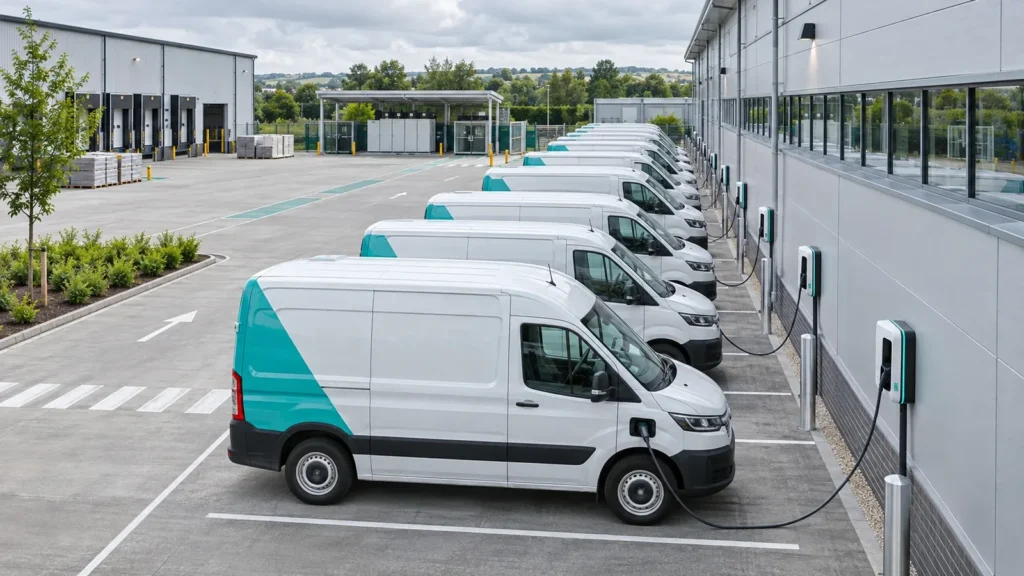
Yes. As more site vans and machinery become electric, the site needs power to charge them as well. Plan charging into the temporary power strategy from the start, rather than adding it later. Mobile chargers can bridge the gap where there is no permanent supply; see mobile EV charging: hire or buy.
Frequently asked questions
Can a battery power a whole construction site?
Sometimes, with a site supply or hybrid generator for recharging. For heavy continuous loads such as large cranes, a grid connection or hybrid is usually needed.
Is HVO a good alternative to diesel?
It is a renewable alternative fuel, but it is still burned in an engine, so it produces local emissions and noise. It does not avoid the need to meet engine emission rules.
Do the London rules apply outside London?
The NRMM rules described here are London’s. Other areas and clients may set their own requirements, so check each project.
Our solution recommendations service sizes battery and hybrid site power from real load data. Tell us about your project.