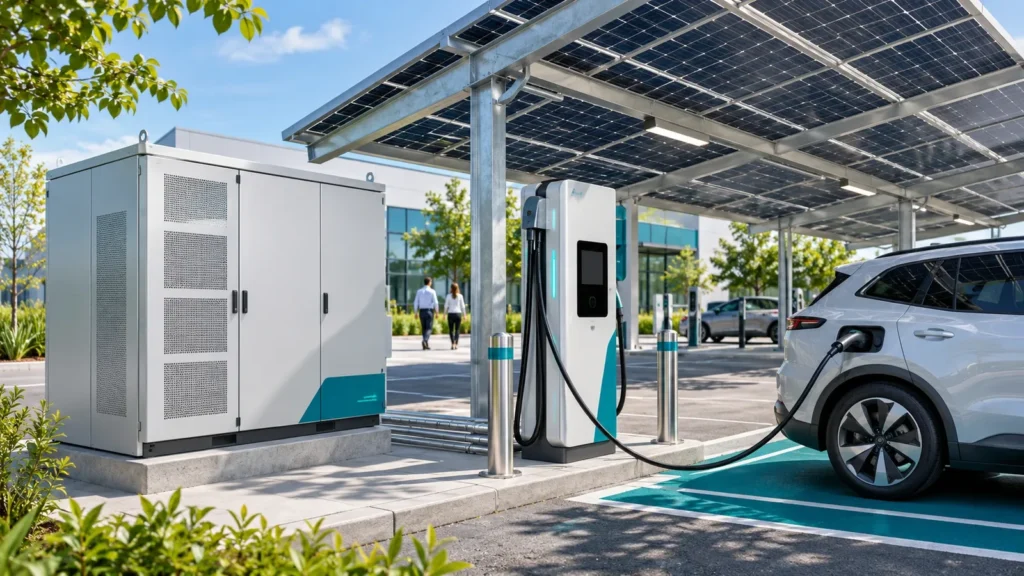
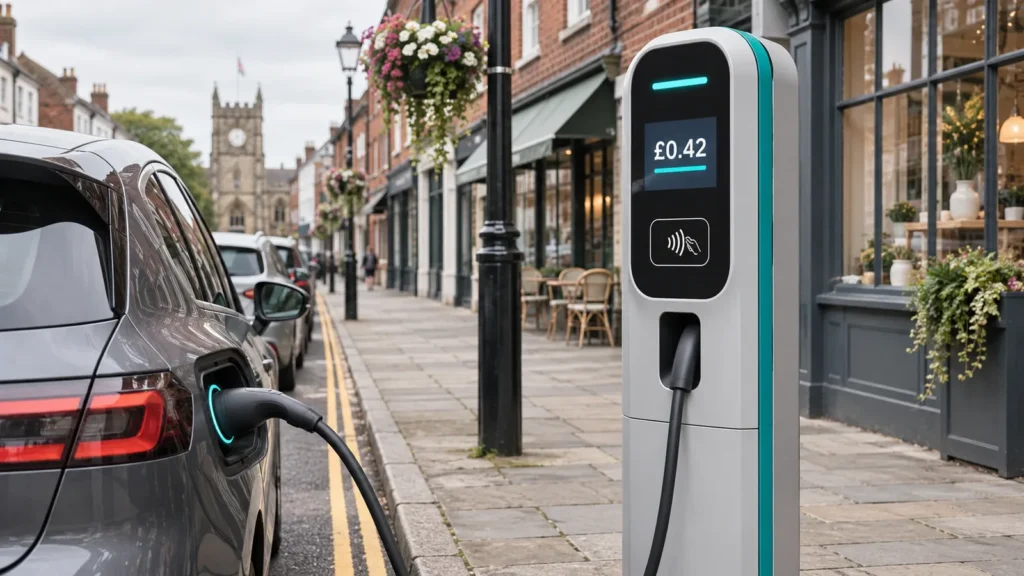
In short: which EV charging rules apply depends on who uses your chargers. Public chargers, including those in public car parks, fall under the Public Charge Point Regulations 2023, which cover payment, pricing, reliability, a 24-hour helpline and data. Private workplace and depot chargers for cars and vans must meet the Smart Charge Points Regulations. New buildings in England must meet Part S of the Building Regulations. Every installation must meet BS 7671, and the network operator must be notified or approve the connection.
This guide is for businesses, landlords and public bodies that install or operate chargers. If you make or import chargers, see our guide for brands on selling EV chargers in the UK.
Which rules apply to my chargers?
| Your chargers are | Main rules |
|---|---|
| Open to the public, including in public car parks | Public Charge Point Regulations 2023 |
| For staff or your own fleet (cars and vans, below 50 kW) | Smart Charge Points Regulations 2021 |
| Part of a new building or major renovation in England | Building Regulations Part S |
| Any installation | BS 7671 wiring regulations; network operator notification or approval |
What do the Public Charge Point Regulations require?
The Public Charge Point Regulations 2023 place duties on charge point operators, meaning the owner of a charge point or whoever operates it on the owner’s behalf. A public charge point includes one in a public car park; workplace charge points are excluded. The main duties are:
- Contactless payment: required for new public charge points of 8 kW and above, and for rapid charge points (50 kW and above) that were already operating.
- Pricing: the total price must be clearly displayed in pence per kWh, and must not rise once charging has started.
- Reliability: a network of rapid charge points must be reliable for 99% of the time, on average, over each calendar year.
- Helpline: a free, staffed helpline available 24 hours a day, every day, with the number displayed at the charge point.
- Data: specified information about charge points must be made available to the public, free of charge, in a machine-readable format.
Some duties do not apply to micro businesses, but the pricing rule applies to all operators. The regulations are enforced by the Secretary of State, with civil penalties of up to £10,000 per charge point. If an operator runs the chargers for you, make sure the contract makes clear who meets each duty; see charger uptime and service levels.
What about private workplace and depot chargers?
Charge points for cars and vans that are not public and not rapid must meet the Smart Charge Points Regulations. They must have smart functionality, keep working if the network connection is lost, measure energy use, come with default charging hours outside weekday peak times, apply a randomised delay and meet security requirements. In practice your supplier should provide chargers that comply, but check before you buy.
What about new buildings?
In England, Part S of the Building Regulations requires charge points and cable routes in new residential and non-residential buildings with parking, and in some major renovations. There are exemptions, including where grid connection costs would be too high. Our guide to Part S covers the detail.
Installation, grid and planning
- Wiring: installations must meet BS 7671, the IET wiring regulations.
- Network operator: the installer must notify the network operator, and larger installations need approval before work starts. SSEN, for example, requires a load check before installation where a property’s total demand is above 60 amps.
- Planning: government guidance says a planning application is not required for most non-domestic chargepoints, except, for example, where wider large-scale development is proposed. Large equipment housings have limits, so check the current rules for your site.
- Accessibility: for public sites, PAS 1899 sets out how to make charge points accessible.
For the full installation process, see our guide to commercial EV charger installation.
Frequently asked questions
Do the public charging rules apply to chargers in my customer car park?
If the car park is open to the public and the chargers are intended for public use, they are likely to be public charge points. Check the definitions in the regulations, and take advice if unsure.
Do I need contactless payment on workplace chargers?
Workplace charge points are excluded from the public charging rules, so the contactless requirement does not apply to them. They must meet the smart charging rules instead.
What happens if a public charger breaks the rules?
The regulations allow civil penalties of up to £10,000 per charge point. Operators must also publish whether they meet the reliability requirement.
Our solution recommendations service checks which rules apply to your site and builds them into the design. Tell us about your chargers.