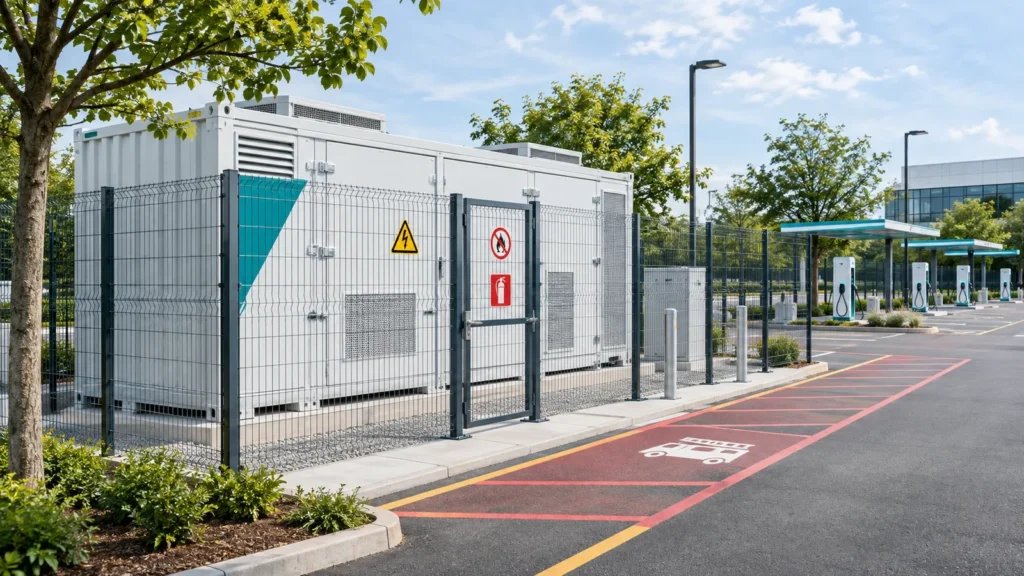
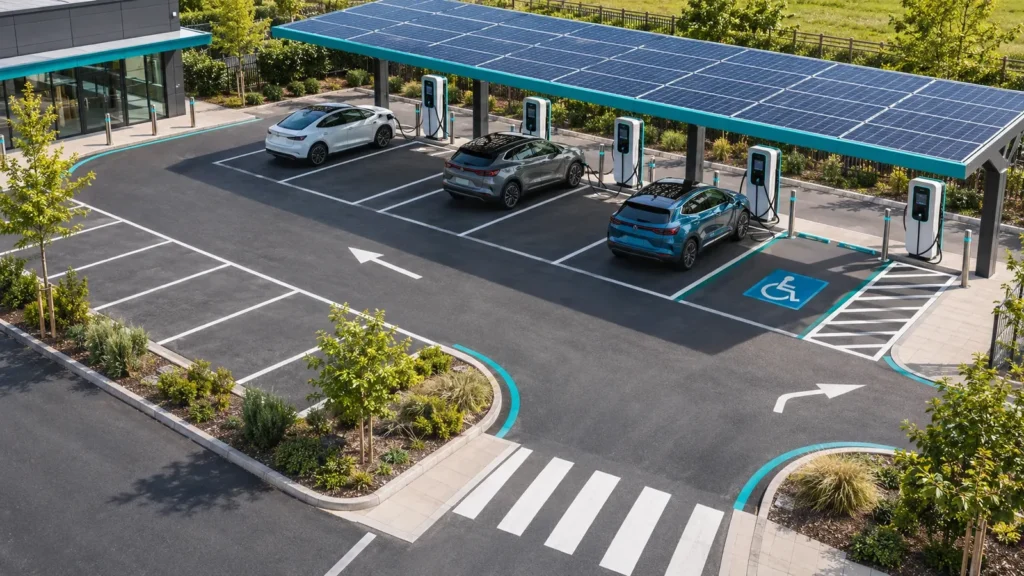
In short: good charging station design makes chargers easy to reach, safe to use and simple to maintain. Plan the bays around how vehicles arrive and park, keep cables off the ground and away from walkways, protect equipment from impact, include accessible bays, and leave space and ducting for growth. Design the electrical route and the grid connection at the same time as the layout, not afterwards.
A charger in the wrong place can be awkward, unsafe or simply unused. Layout decisions are cheap at the design stage and expensive to change later. This guide covers the points we check on every site.
Start with how vehicles use the site
- Who parks there: cars, vans, buses or trucks, each with different sizes and turning circles.
- How they park: nose in, reversing in, or drive through, which decides where the charging inlet ends up.
- How long they stay: which decides charger power and how many bays need charging.
- When they arrive: whether bays must be reached in a hurry, or vehicles are parked in lanes overnight.
For depots, walk the site at the times vehicles return and leave. For bus depots in particular, parking patterns shape the whole design; see bus and coach depot charging.
Where should chargers go?
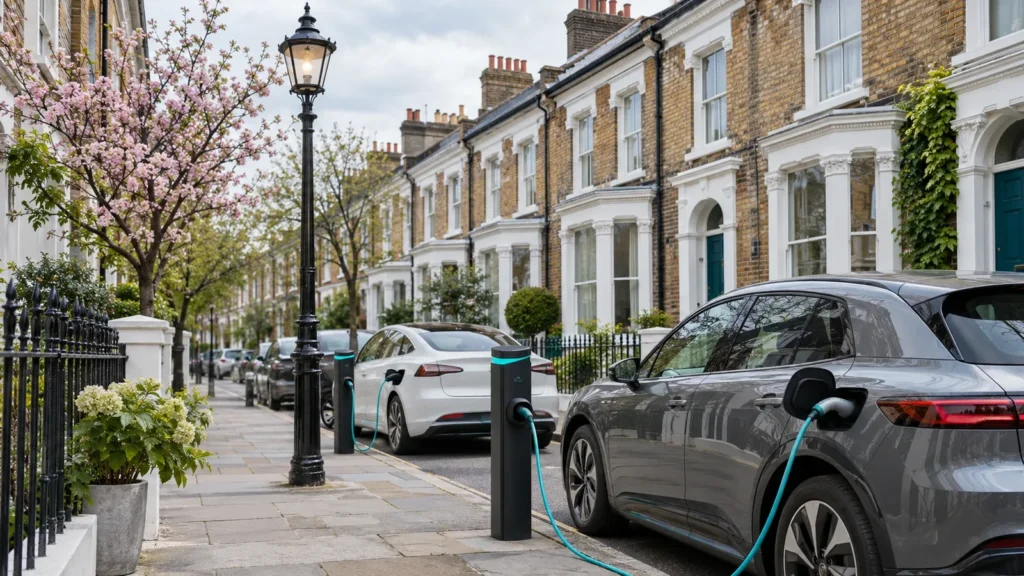
- Place chargers so the cable reaches the inlet without stretching across another bay or walkway.
- Keep pedestrian routes clear of cables and charger housings.
- Group chargers to shorten cable runs from the supply, which reduces cost.
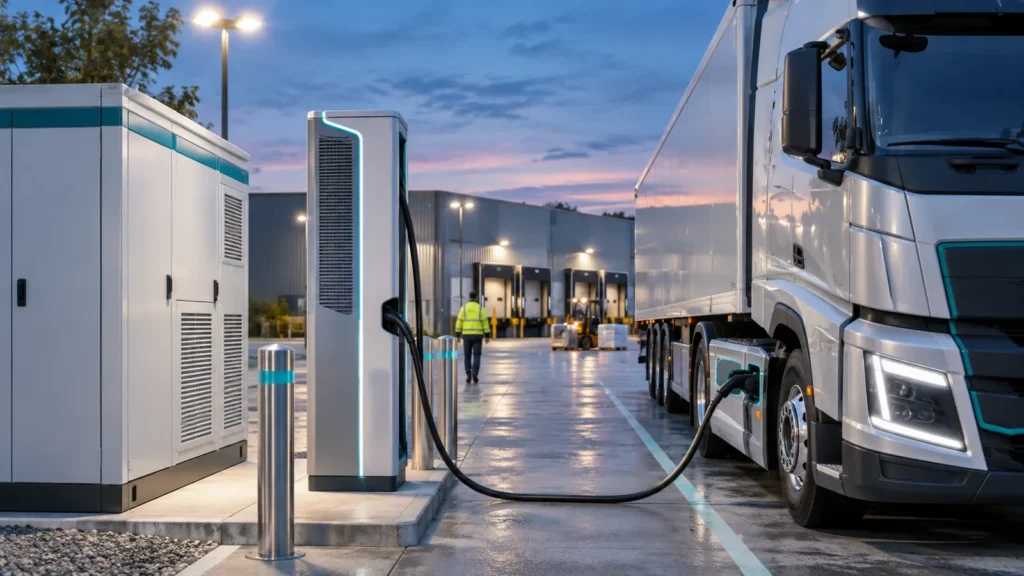
- Put shared DC chargers where vehicles can reach them without blocking others.
Distributed systems, with a central power cabinet and slim dispensers at each bay, can help on tight sites; see distributed vs standalone chargers.
How do you protect the equipment?
- Impact protection: bollards or kerbs where vehicles could strike chargers.
- Cable management: retractors, holsters or overhead systems keep cables off the ground and reduce damage and trip hazards.
- Weather: canopies or suitably rated equipment for exposed sites.
- Security: lighting and CCTV for sites used at night.
What about accessibility?
Public charge points should be usable by everyone. PAS 1899:2022 from the British Standards Institution sets out how to make public charge points accessible. Public-sector tenders often require it. Build accessible bays into the design from the start; retrofitting them is costly.
Plan the power and the rules together
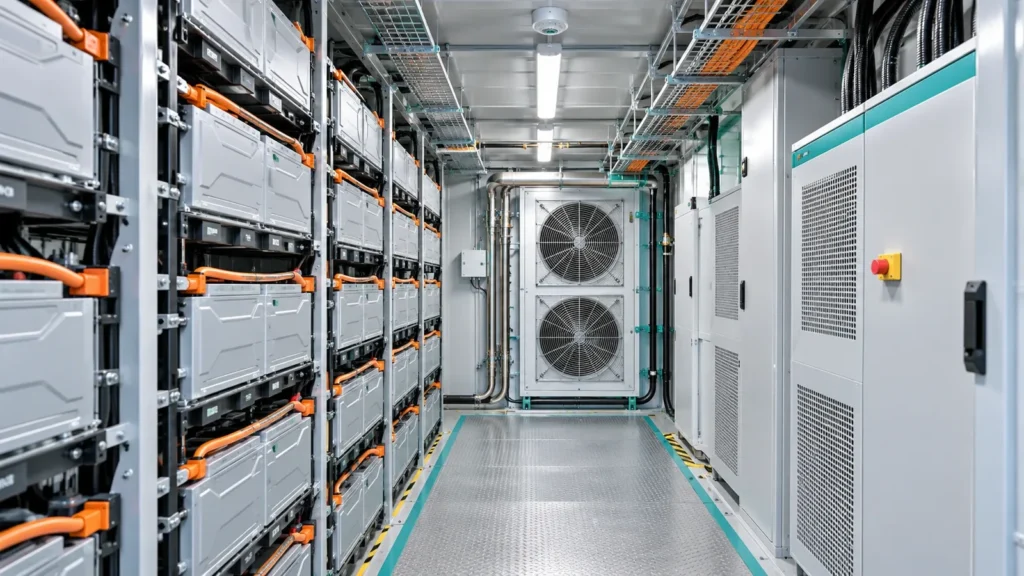
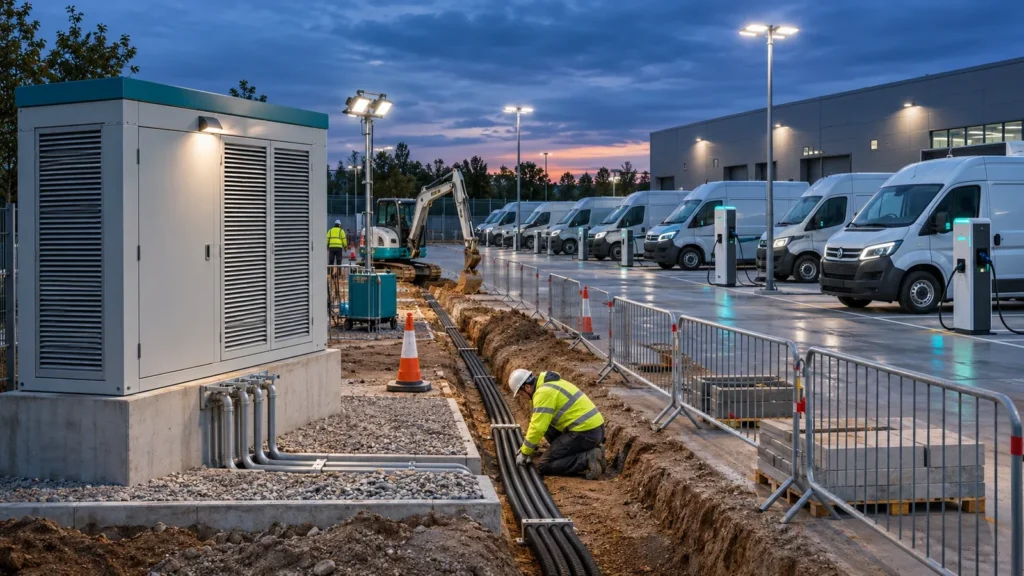
- Electrical route: plan switchgear, cable routes and ducting with the layout.
- Grid capacity: check what the site can supply before fixing charger numbers; see commercial EV charger installation. Network operators publish network capacity information that gives an early indication.
- Public sites: design for contactless payment, clear pricing and the helpline sign required by the public charging rules; see EV charging regulations for site owners.
- New buildings: in England, Part S may set minimum charge points and cable routes; see our guide to Part S.
Design for growth
Demand for charging grows. While the ground is open, lay ducting to future bays, size switchgear with spare ways, and leave space for additional chargers or a battery. Adding capacity later then means pulling cables, not digging up the car park.
Design checklist
| Check | Why it matters |
|---|---|
| Cable reach to vehicle inlets | Avoids stretched cables and unusable bays |
| Clear pedestrian routes | Safety and accessibility |
| Impact protection | Prevents costly damage and downtime |
| Accessible bays | Usable by all drivers, often required in tenders |
| Lighting and security | Safe use at night |
| Ducting for future bays | Cheaper growth |
| Grid and electrical route | Realistic charger numbers and costs |
Frequently asked questions
Which side of the bay should the charger go?
Where the cable reaches the vehicle inlet for the way vehicles usually park. On mixed sites, central positions or longer cables help.
Do I need a canopy?
Not always. It helps on exposed or busy public sites, and can carry solar panels; see solar carports.
How many bays should be accessible?
Follow PAS 1899 and any tender requirements for public sites, and talk to likely users about their needs.
Our solution recommendations service designs charging layouts around your vehicles and site. Tell us about your site.