In short: electric heavy goods vehicles carry much larger batteries than cars, so they need far more charging power and space. Most will charge at depots overnight or between shifts, topped up by high-power charging on long routes. The Megawatt Charging System is the emerging standard for the fastest charging. For operators, the hardest part is usually the depot grid connection, so start planning power years before the trucks arrive.
Electric trucks are moving from trials to fleets. Government policy sets the direction, and early projects are showing what works. The vehicles are only half the story: without the right charging, an electric truck cannot do the job of a diesel one.
What is the policy timeline?
The UK government has confirmed that the sale of new non-zero-emission HGVs of 26 tonnes or less will end from 2035, and that from 2040 all new HGVs sold in the UK must be zero emission. The 2040 date applies to the heaviest articulated trucks, above 26 tonnes.
To build experience before then, the government’s zero emission HGV and infrastructure demonstrator programme is backed by £200 million of funding to roll out up to 370 zero emission trucks and around 57 refuelling and electric charging sites. The projects include eFREIGHT 2030, GRIDSERVE’s Electric Freightway and ZEN Freight.
How do electric trucks charge?
Depot charging
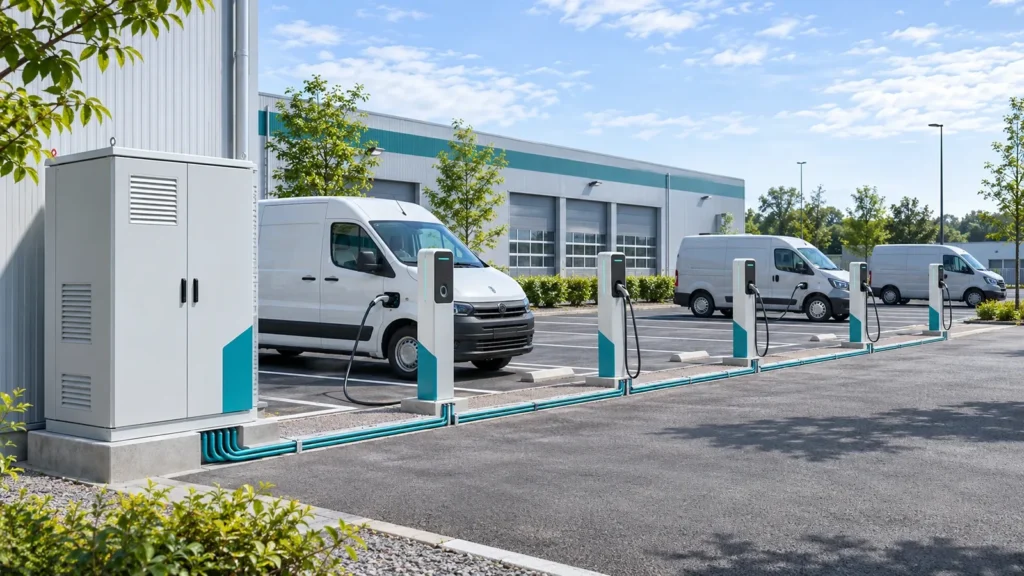
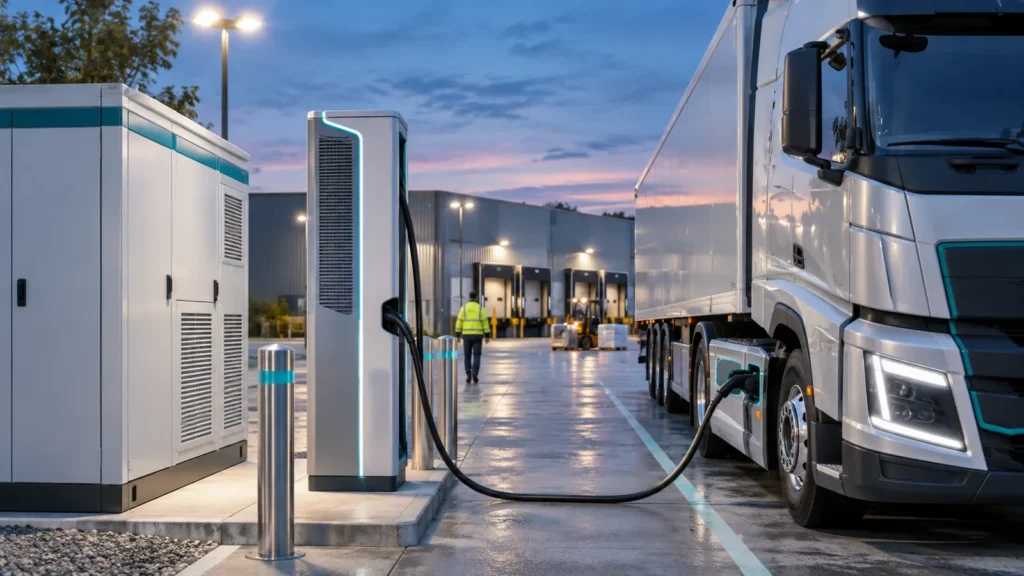
Most energy will be delivered at the depot, overnight or between shifts, when trucks are parked for hours. Depot charging can use moderate DC power per truck, but a whole fleet charging at once adds up to a large site load.
Opportunity charging
Top-ups during loading, unloading or driver breaks extend range without long stops. Charging that fits around existing operations is the most efficient kind.
En-route high-power charging
For long-distance work, trucks need high-power charging on the road network. This is where the Megawatt Charging System comes in.
What is the Megawatt Charging System?
The Megawatt Charging System, or MCS, is a charging standard designed for heavy vehicles. Its connector is rated for up to 3,000 amps at 1,250 volts DC, a maximum of 3.75 megawatts. The North American standard, SAE J3271, was published in March 2025, and the connector has been released as an international standard, IEC 63379. Expect MCS on new long-haul trucks and en-route charging hubs, while CCS remains common for depot charging and smaller trucks.
How do drivers’ hours shape charging?
Charging plans must fit around the rules on drivers’ hours. Under the rules that apply in Great Britain, drivers need a break or breaks totalling at least 45 minutes after no more than 4 hours 30 minutes of driving, and daily driving is limited to 9 hours, extendable to 10 hours twice a week. A charging stop that coincides with the mandatory break costs no extra time. That is why high-power charging matters: it lets a meaningful amount of energy go in during a 45-minute break.
What makes HGV charging sites different?
- Power: a depot charging many trucks at once can need a grid connection measured in megawatts.
- Space: bays must suit articulated vehicles, ideally drive-through so trucks do not need to reverse, with room for long cables or overhead cable management.
- Timing: grid connections can take far longer than buying trucks. The SMMT has warned that van and truck operators face waits of up to 15 years for depot connections.
- Resilience: if charging fails, deliveries fail. Plan for redundancy and fast repair.
- Shared sites: public HGV charging hubs need secure parking and driver facilities, as well as chargers.
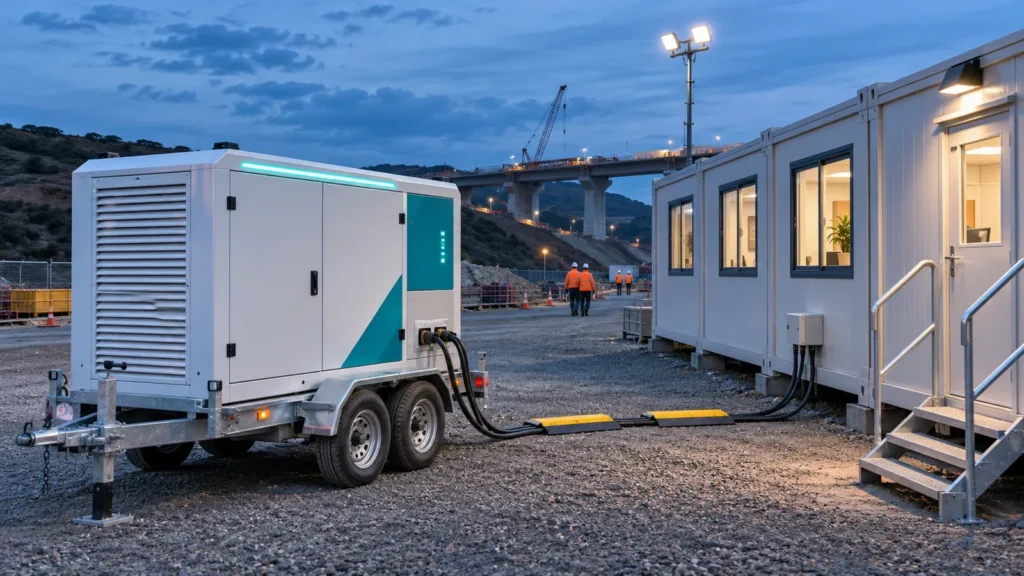
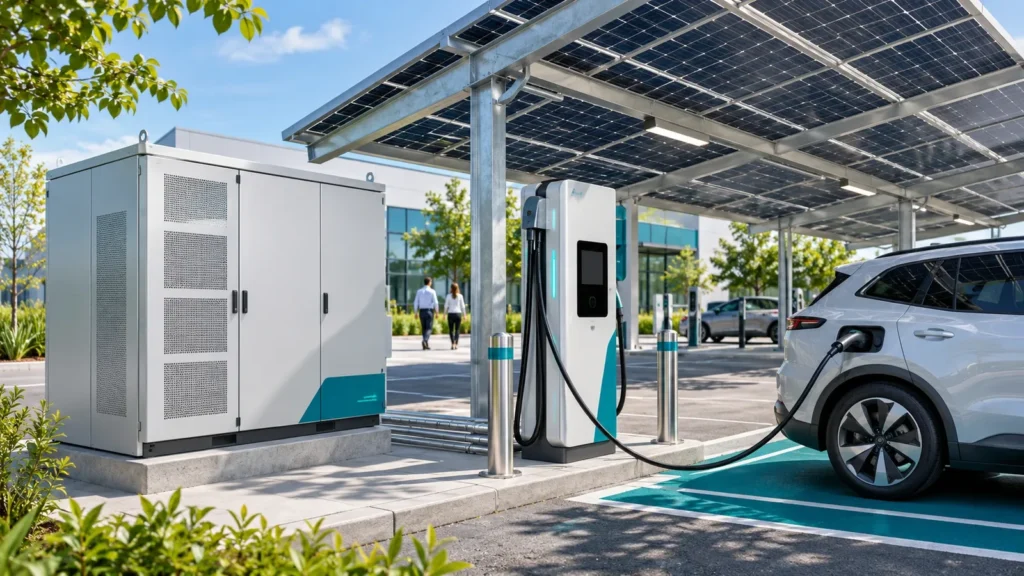
Where the grid is the constraint, battery storage can help a depot start electrifying before a full upgrade. Our articles on battery-boosted charging and storage as a grid workaround explain the options.
Planning checklist for operators
| Step | What to do |
|---|---|
| Map duty cycles | Daily distance, payload, routes and parked hours for each vehicle type |
| Estimate energy | kWh per truck per day, and how many charge at once |
| Ask about the grid early | Request a connection offer before ordering trucks |
| Choose charging types | Depot, opportunity and en-route mix, and connector standards |
| Design the site | Bay layout, vehicle movements, cable management and safety |
| Phase the rollout | Start with routes that suit today’s vehicles and expand |
Frequently asked questions
Can electric trucks use car chargers?
Many smaller and medium trucks use CCS, the same connector as cars, but access, bay size and power often make car charging sites impractical for trucks.
When will megawatt charging be widely available?
The standards are now published, and early sites are appearing. Expect availability to grow over the next few years, led by long-haul corridors.
Where should an operator start?
With the depot. Understanding your duty cycles and grid capacity tells you which routes can go electric first.
Planning depot charging and fleet electrification is part of our solution recommendations service. For general charger choices, see our guide to EV charger requirements. Tell us about your fleet.