In short: battery-boosted charging pairs fast chargers with on-site battery storage, so a site can deliver high charging power from a modest grid connection. It matters because demand for fast charging is rising faster than the grid can be reinforced. A battery lets sites open sooner, avoid costly upgrades, cut peak-time electricity costs and make better use of the connection they already have.
Electric vehicles are no longer a niche. In 2025, 473,348 new battery electric cars were registered in the UK, a 23.4% share of a market of just over two million, according to SMMT figures reported by The EV Network. Every one of those drivers needs somewhere to charge, and many want to charge quickly.
Fast charging needs a lot of power at once. That is where the trouble starts, and where battery-boosted charging comes in.
What is battery-boosted charging?
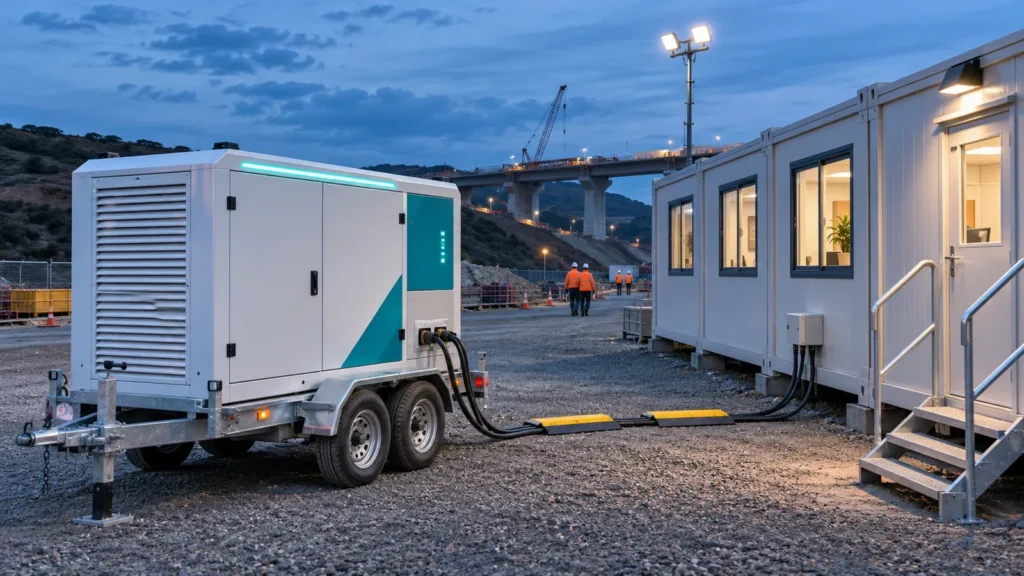
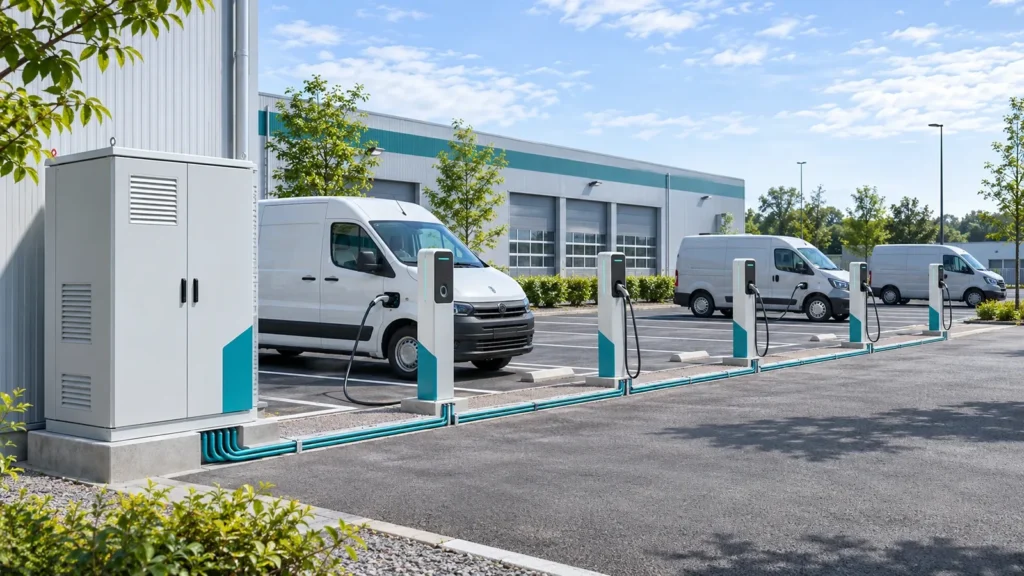
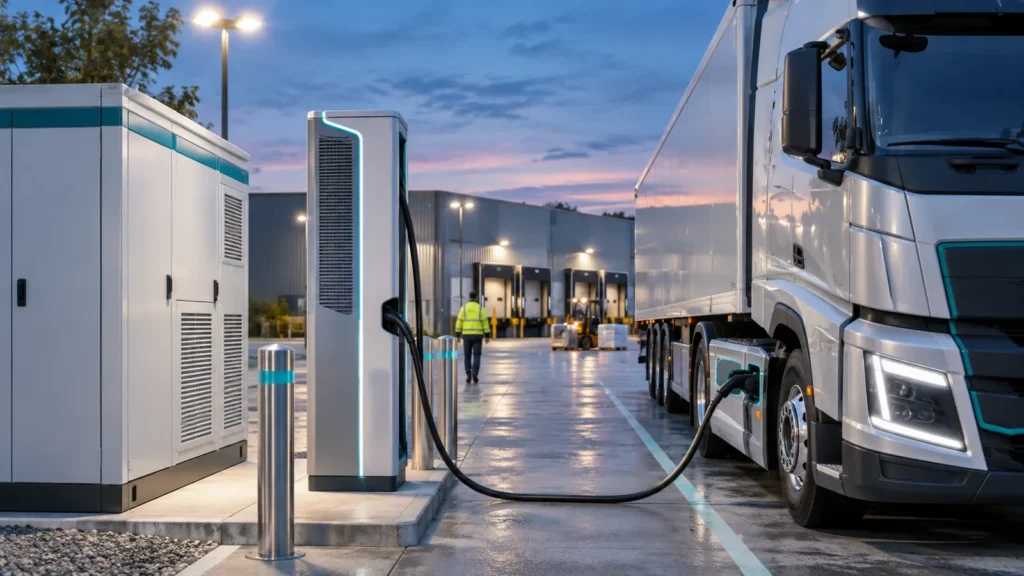
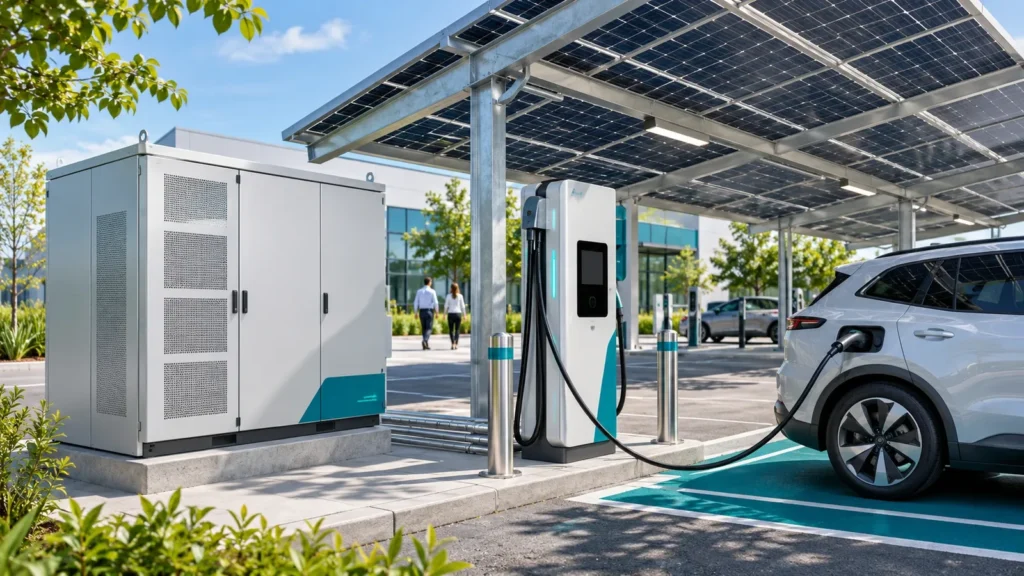
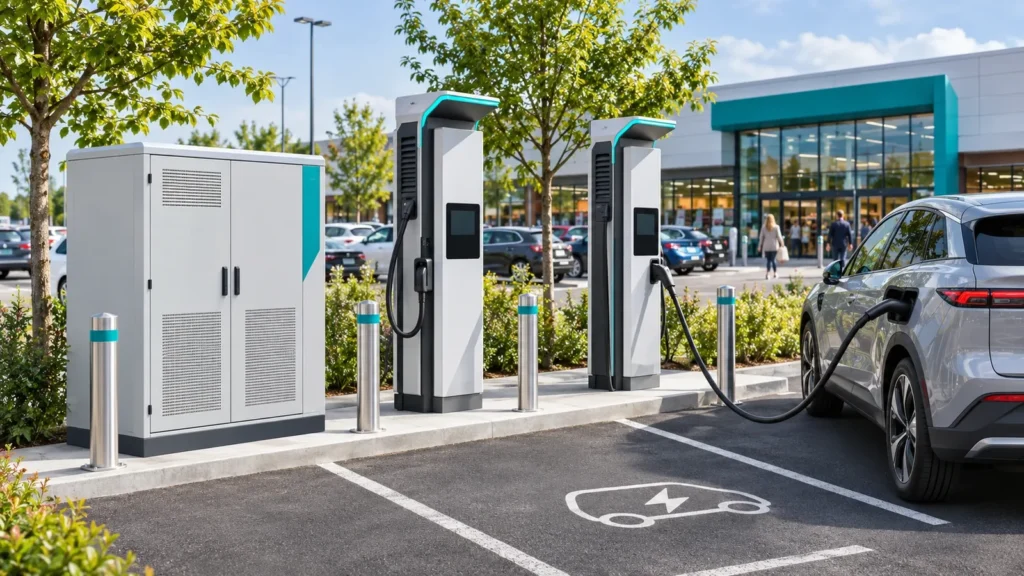
A battery-boosted charging site has its own energy store. The battery fills up steadily from the grid, then releases energy quickly when a vehicle plugs in. The charger draws from the battery and the grid together, so it can deliver far more power than the grid connection alone allows.
At one site in Würzburg, Germany, ADS-TEC Energy reports that its battery-based charger delivers up to 280 kW of charging power with just 50 kW of available grid capacity. The battery can be built into the charger or installed alongside several chargers as a separate system.
Why does it matter now?
The grid cannot keep up with demand
Getting a new or larger grid connection can take years. In late 2024, around 722 GW of projects were waiting in Great Britain’s connection queue, reported Solar Power Portal. Reforms have since cut the queue by nearly two thirds, Ofgem said in December 2025, but local reinforcement still takes time. For fleets, the SMMT has warned that van and truck operators face waits of up to 15 years for depot connections.
It gets sites open sooner
A battery lets a site open on the connection it can get today instead of waiting for the one it would ideally want. The size of the connection makes a big difference. In Devon, a 10-bay charging hub reapplied for a more appropriately sized connection, which cut the connection cost by over £1 million and brought energisation forward by three years, Vattenfall reported. Storage is what makes fast charging work on a smaller connection like that.
It cuts peak electricity costs
Network charges are highest at peak times. As Drax explains, the red unit rate usually applies from 4pm to 7pm. A battery can charge during cheaper hours and supply chargers during the peak, reducing both peak charges and the capacity a site needs to agree with its network operator.
It makes better use of what you already have
Many sites have spare grid capacity for most of the day and run short only at peaks. A battery stores that spare capacity and releases it when it is needed, so the same connection can support more charging.
Storage costs have fallen sharply
Battery pack prices for stationary storage fell to $70 per kWh in 2025, 45% lower than in 2024, according to BloombergNEF. Pack prices are only part of a finished system’s cost, but the fall has changed the business case for storage on many sites.
Who benefits most?
| Site | Why battery boosting helps |
|---|---|
| Retail and hospitality | Short, busy peaks with quiet periods to refill |
| Fleet depots | Vehicles return in waves; the upgrade is years away |
| Rural and roadside sites | Weak local networks and costly reinforcement |
| Existing charging hubs | Add chargers without a new connection |
| Temporary or phased sites | Open now and grow as demand grows |
When is it not the answer?
Battery boosting is not a fix for every site. If chargers run flat out for hours, the battery never gets time to refill. If a fast, affordable connection is available, a battery may add cost without enough benefit. Our article on when battery-integrated fast charging makes sense sets out the conditions and a sizing example, and our guide to storage as a grid workaround covers the questions to ask first.
Frequently asked questions
Is battery-boosted charging the same as battery-integrated charging?
Broadly, yes. Battery-integrated usually means the battery is inside the charger. Battery-boosted can also describe a separate battery supporting several chargers.
Does a battery make charging slower once it runs out?
Yes. When the battery is empty, chargers can deliver only what the grid supplies. Good sizing makes sure that happens rarely, if at all.
Can the battery do anything else?
It can reduce peak demand charges and, where the setup allows, store energy from on-site solar or take part in flexibility services.
Working out whether battery boosting fits your site is part of our solution recommendations service. Tell us about your site.