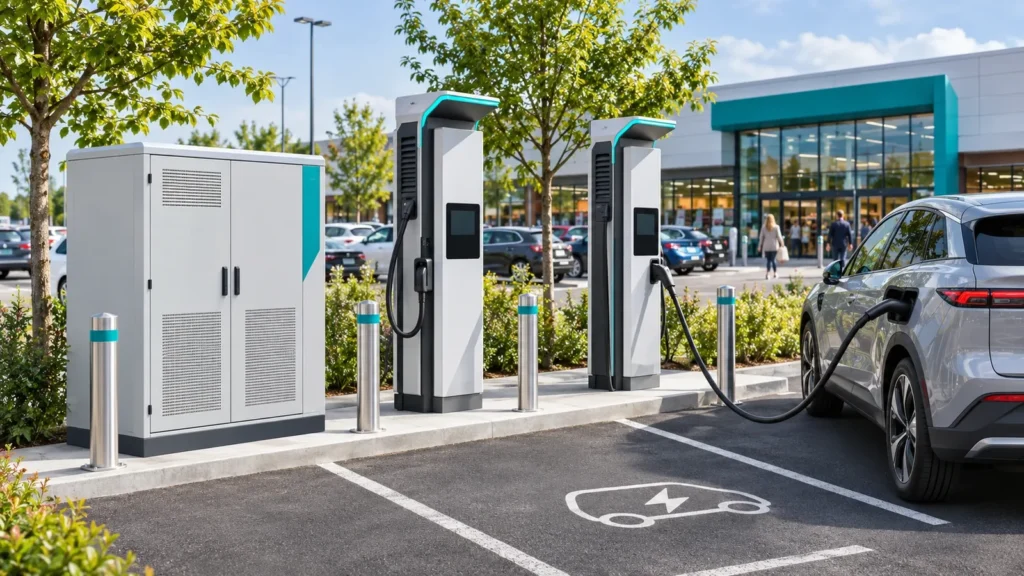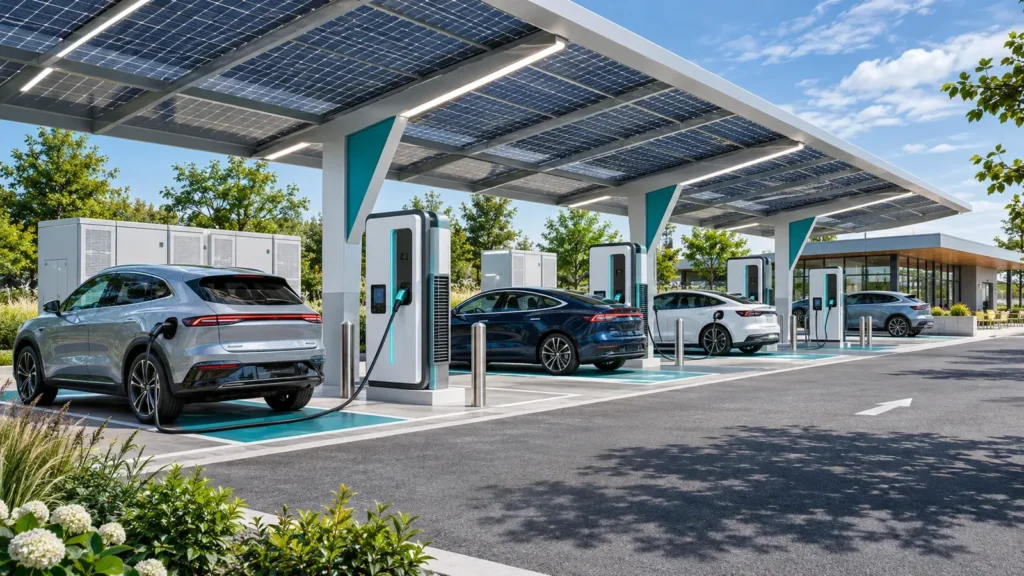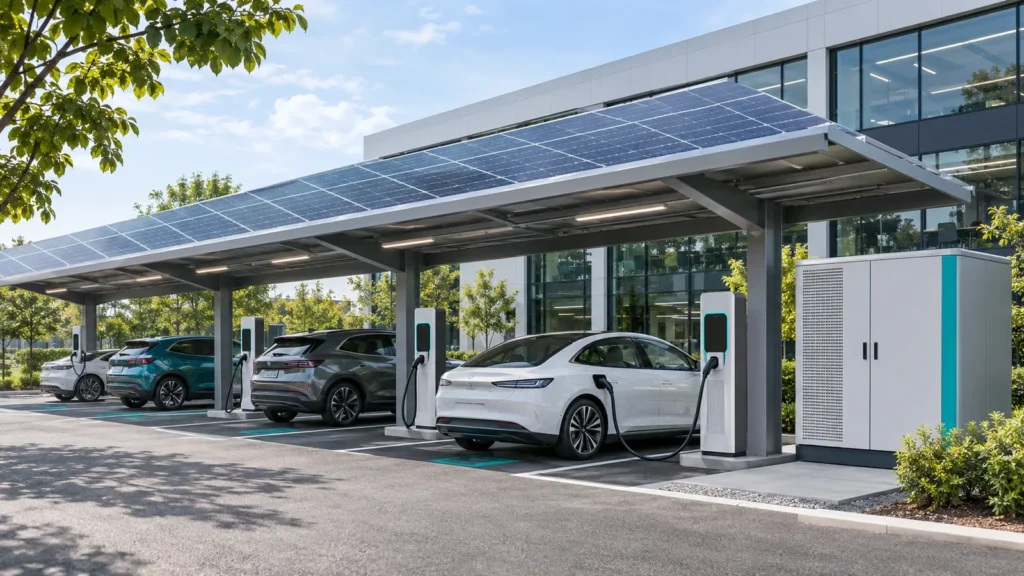
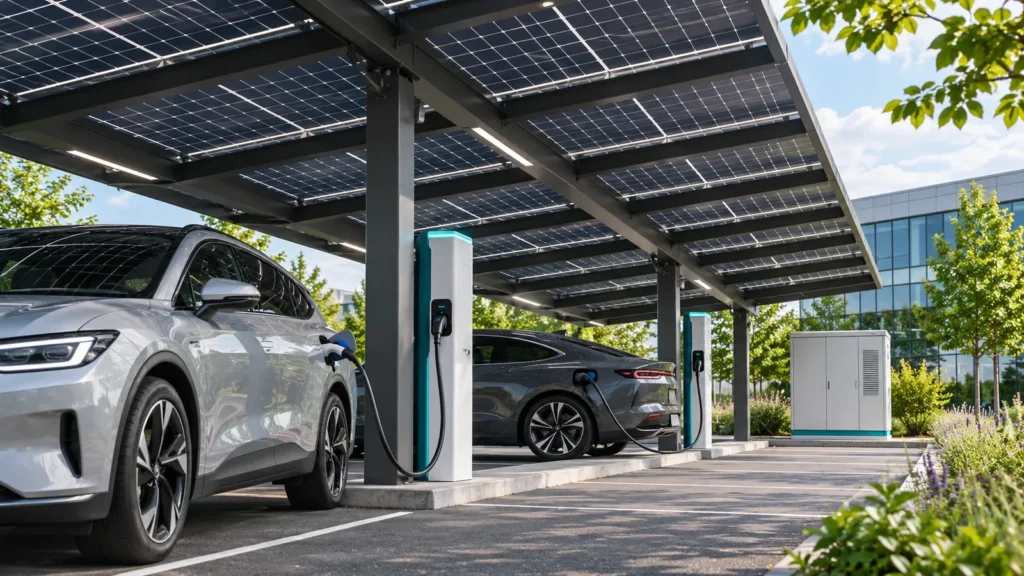
In short: a solar carport puts solar panels on a canopy over parking bays, so the car park generates electricity for chargers or the building. Adding battery storage lets you use more of that solar power and supply chargers when the sun is not shining. Solar carports pay back best where the site uses most of the power itself during the day, the canopy cost can be shared with other benefits such as shade, and planning and grid approvals are settled early.
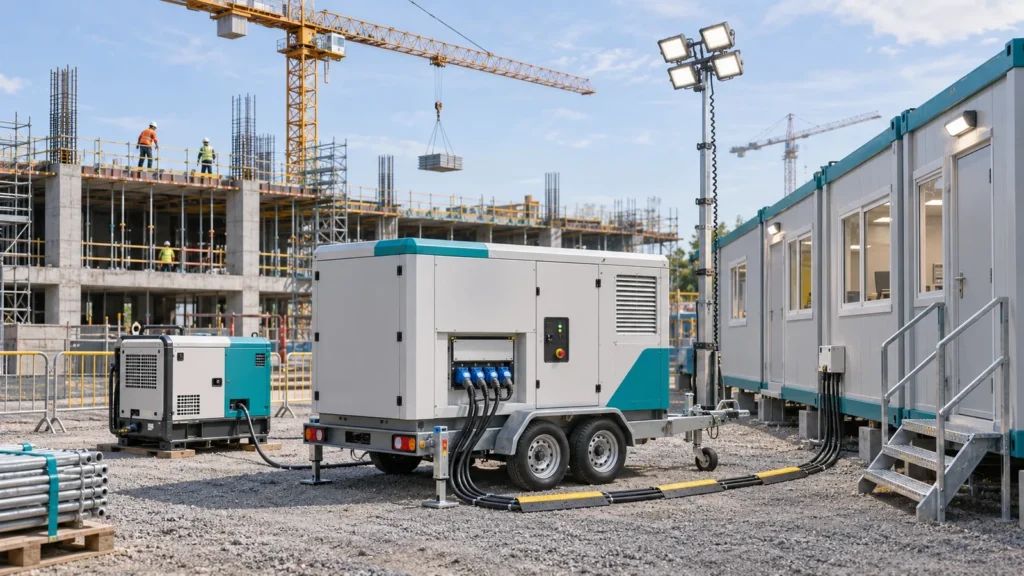
Car parks are often the largest unused surface a business owns. A solar canopy turns that space into generation, and pairing it with EV charging and storage can reduce electricity costs and ease grid limits. This article explains how the pieces fit and what decides whether the numbers work. Where there is no grid connection, the same parts can form an off-grid charging system.
How does a solar carport system work?
- Canopy and panels: a steel or aluminium structure over the bays carries solar panels.
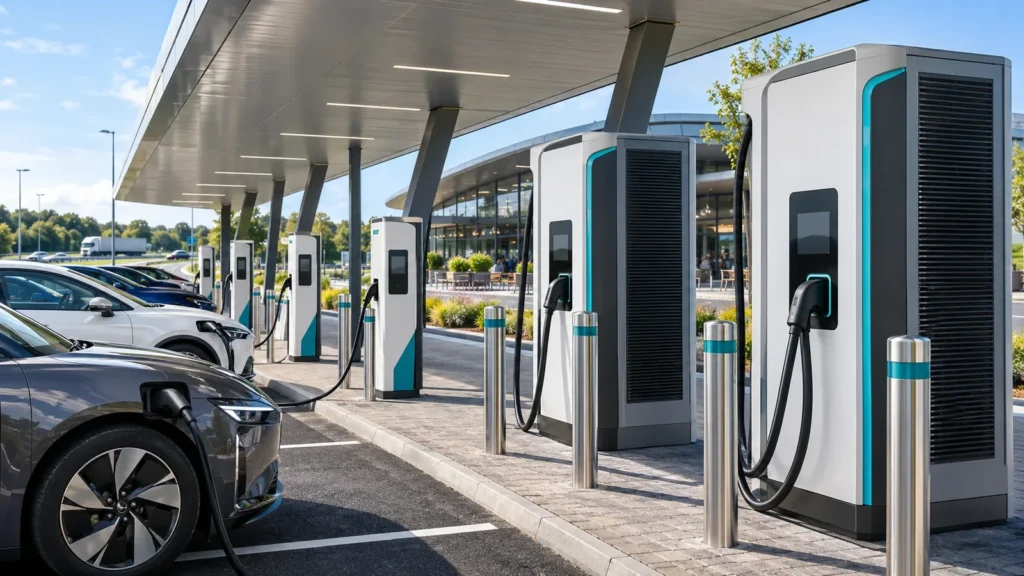
- Chargers: mounted on the canopy columns or on separate posts.
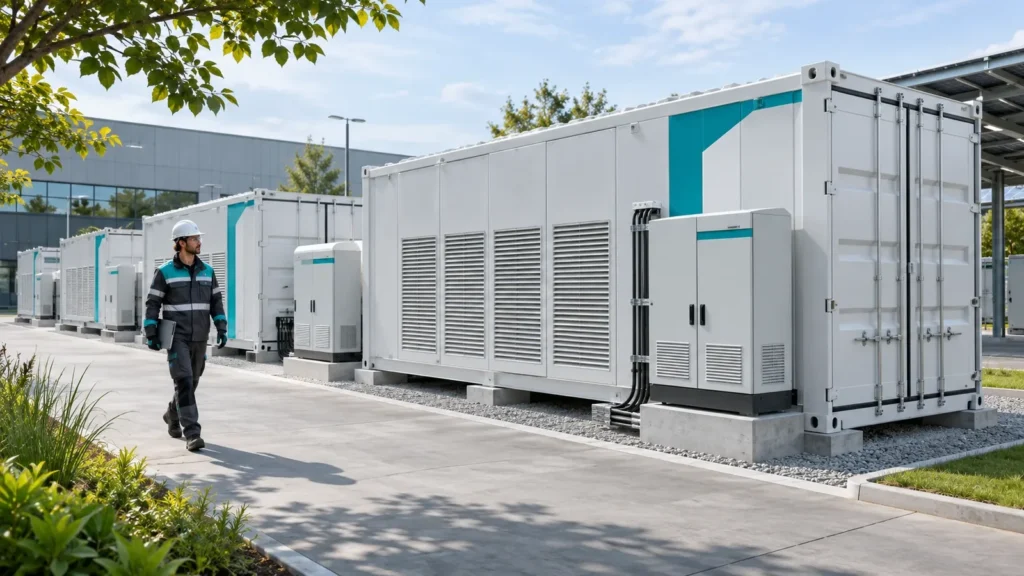
- Battery storage (optional): stores surplus solar power for use later in the day or evening; see EV charging with solar and battery storage.
- Controls: decide when solar power goes to chargers, the building, the battery or the grid.
When does it pay back?
The value of solar power depends on using it on site. Electricity you would otherwise buy is usually worth more to you than electricity you export, so compare your import and export prices. Solar carports work best where: Eligible sites can still be paid for exported power under the Smart Export Guarantee.
- vehicles are parked and charging during the day, such as at workplaces, retail or fleet sites with daytime dwell;
- the building has a daytime load that can absorb surplus solar power;
- a battery can shift surplus solar power into the evening, when network charges are highest. Drax explains that the red band usually runs from 4pm to 7pm.
The canopy structure is usually the largest cost, so count the other benefits it brings too: shade and shelter for vehicles and visitors, and a visible sign of the site’s sustainability.
Why add battery storage?
Solar output peaks around midday, while charging and building demand may not. A battery stores the surplus and releases it later, so more solar power is used on site. It can also boost charging power above what the grid connection allows. For the wider case, see why battery-boosted EV charging matters.
There is an efficiency point too. Solar panels and batteries both work in DC, while most chargers draw AC. Systems that keep power in DC between the battery and the charger can avoid some conversion losses; our article on DC-DC vs AC-DC chargers explains when that matters.
What approvals do you need?
- Planning: check with the local planning authority whether the canopy needs permission. Rules depend on size, location and the site’s existing permissions.
- Grid connection: solar panels and batteries that can export need approval from the network operator under the G98 or G99 rules.
- Battery safety: larger batteries may need early engagement with the fire and rescue service; see battery storage planning permission and fire safety.
- Structure: canopy foundations, wind loading and clearance for the vehicles that use the car park.
Planning checklist
| Question | Why it matters |
|---|---|
| When are vehicles parked and charging? | Decides how much solar power is used directly |
| What is the building’s daytime load? | Absorbs surplus solar power |
| Is a battery worthwhile? | Shifts solar to the evening and eases grid limits |
| What does the grid connection allow? | Sets charger power and export limits |
| What approvals are needed? | Planning, network operator, fire service |
| How will the canopy affect the car park? | Bay layout, lighting, drainage, vehicle heights |
Frequently asked questions
Can a solar carport power EV chargers on its own?
Rarely all the time. Solar output varies with season and weather, so chargers still need the grid, with solar and storage reducing what you buy.
Do I need a battery?
Not always. If most solar power is used during the day, a battery may add little. It helps most where demand peaks in the evening or the grid connection is tight.
Do solar carports need planning permission?
It depends on the site and the design. Ask the local planning authority early.
Our solution recommendations service models solar, storage and charging together for your site. Tell us about your car park.