In short: good depot charging starts with the vehicles, not the chargers. Work out how much energy each vehicle needs and how long it is parked, check what power the site can supply, then choose the mix of AC and DC chargers, load management and, if needed, storage that meets that need at the lowest lifetime cost. Plan in phases, buy on open standards, and contract for uptime, because a depot charger that fails stops vehicles leaving.
Depot charging is the backbone of most electric fleets. Vans, buses and trucks return to base, park for hours, and leave again on a schedule. That predictability is a big advantage over public charging, but it also means a depot has to deliver enough energy to every vehicle, every night, without exceeding the site’s power limit. This guide walks through the decisions in the order we take them with clients. Whether you call it depot charging or fleet EV charging, the method is the same.
What makes depot charging different?
Three things set a depot apart from public or workplace charging.
- Every vehicle must be ready on time. A public charger that is busy is an inconvenience. A depot that leaves a van half charged means a missed route.
- The load arrives at once. Vehicles often return within the same hour, so demand peaks just when site electricity is most expensive.
- The site has a hard power limit. Most depots were never designed for charging, and a bigger connection can take years.
The rest of this guide is about meeting the first point while living within the third.
Step 1: How much energy do your vehicles need?
For each vehicle or route type, estimate the daily distance, the vehicle’s energy use per mile in real conditions, and a margin for winter, payload and battery ageing. Multiply out to get kWh per vehicle per day. Then record when each vehicle returns and when it must leave: that is the time window available for charging.
Energy divided by time gives the average power each vehicle needs. For many vans parked overnight, that average is surprisingly low, which is why AC chargers often do the job. Our worked example on how many depot chargers you need takes this step by step.
Step 2: How much power can your site supply?
Get half-hourly meter data for at least a year. Subtract the building’s own load at each time of day from the site’s agreed capacity, and you have the headroom available for charging. Overnight headroom is often much larger than the daytime figure suggests.
If the headroom is not enough, talk to your network operator early, and ask for a formal connection offer rather than a budget estimate. Do not assume the only option is a full upgrade: flexible and timed connections, smarter use of existing capacity and storage can all bridge the gap. Our guide to your options while waiting for a grid connection covers each one.
Step 3: AC or DC, and how many chargers?
| Situation | Usually the right fit |
|---|---|
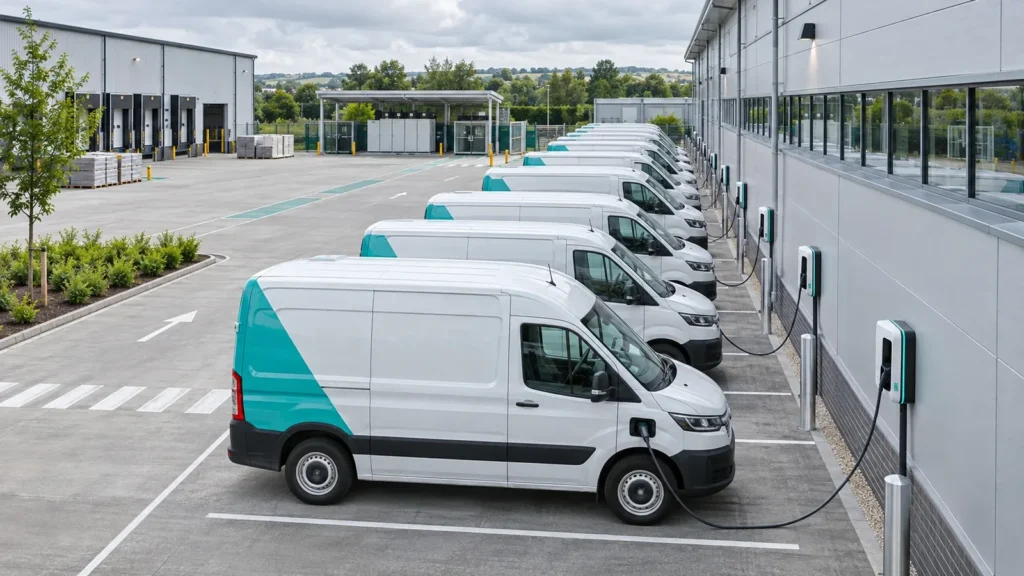
| Vans parked 8 hours or more overnight | AC chargers, one per vehicle, with load management |
| Vehicles with short turnarounds or double shifts | Some DC chargers for top-ups, shared between vehicles |
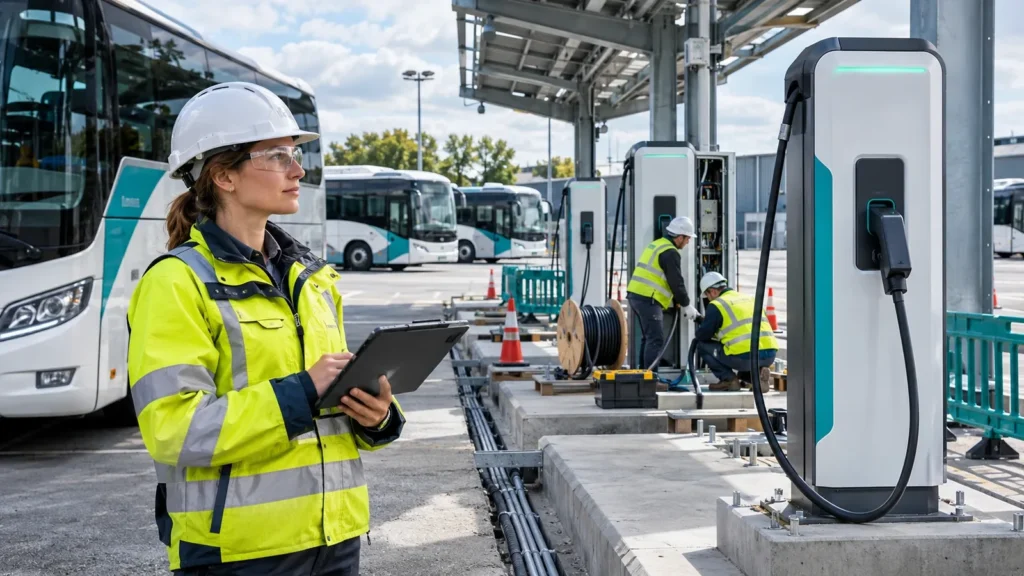
| Buses and coaches | DC charging, often a distributed system with dispensers per bay |
| Heavy trucks | High-power DC, with a plan for megawatt charging on long routes |
One charger per vehicle avoids drivers having to move vehicles at night, which is often worth more than the hardware saving from sharing. Where vehicles must share, plan the rota as carefully as the electrical design. Our EV charger requirements checklist covers connectors, software and site conditions too.
Step 4: How will you manage the load?
Load management is what lets a depot run many chargers on a limited supply. The system watches the site’s total demand and shares the remaining capacity between vehicles, giving priority to those that leave first. It is usually far cheaper than extra grid capacity. We explain the options in load management for depots.
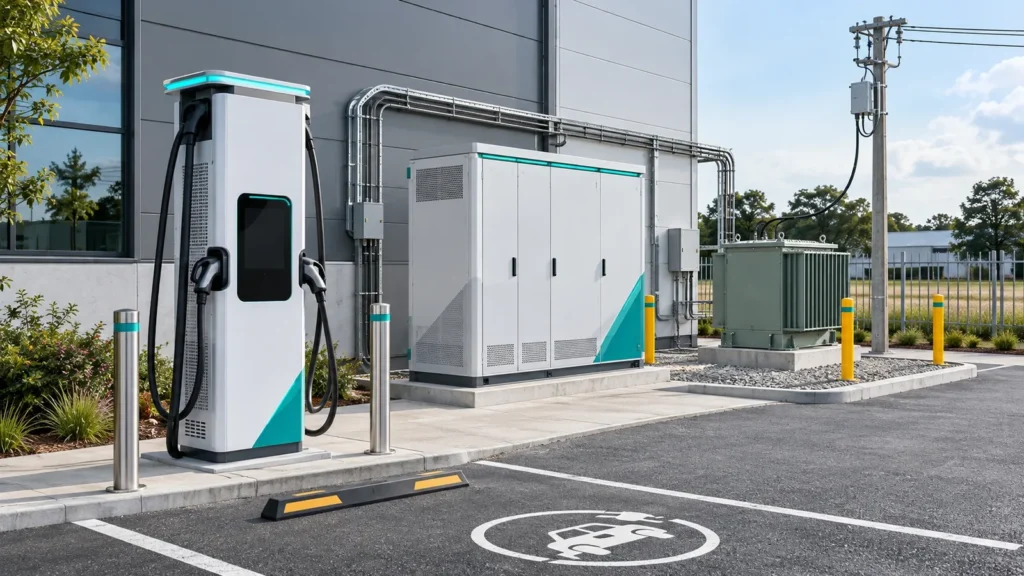
For DC charging, a distributed system with one central power cabinet does a similar job in hardware, moving power between bays as vehicles fill up. See distributed vs standalone chargers on a lower grid supply.
Step 5: Do you need storage or mobile charging?
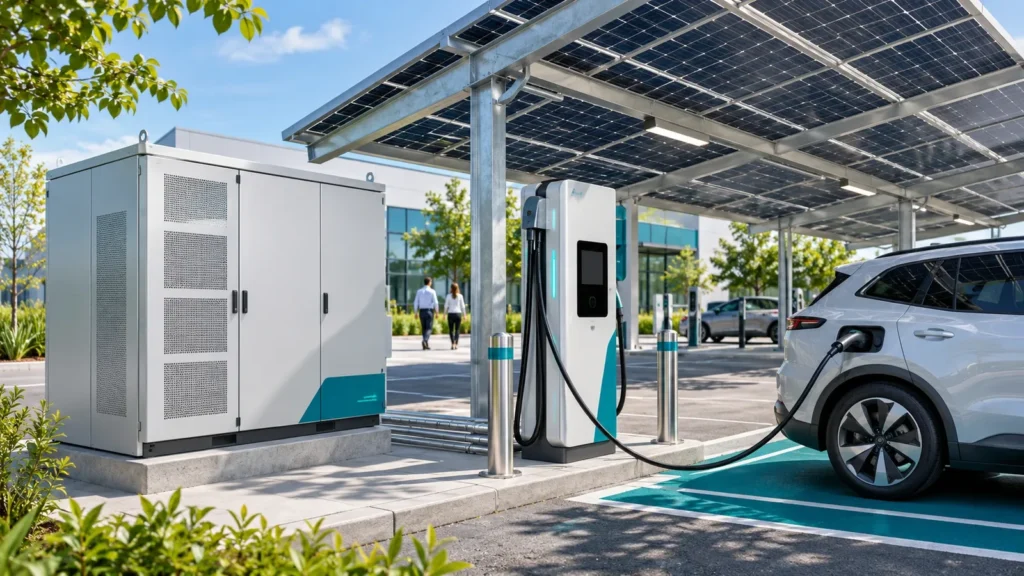
If the site’s headroom still falls short at the busiest times, a battery can store energy when demand is low and release it when vehicles need it. It can also cut peak electricity costs. Before buying one, work through the questions in storage as a grid workaround, then compare the numbers with an upgrade using battery-buffered charging vs a grid upgrade.
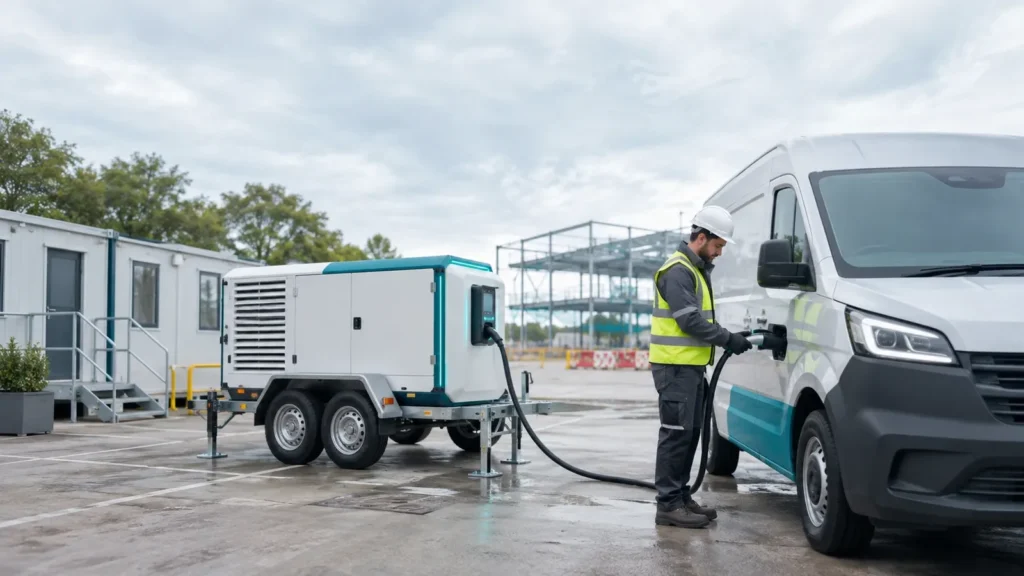
For a few vehicles, or while waiting for the permanent solution, mobile chargers can be hired. Our guide to mobile EV charging covers the checks that matter.
Step 6: Which rules apply?
- Private depot chargers: charge points for cars and vans sold in Great Britain must meet the Smart Charge Points Regulations unless they are public or rapid (50 kW and above). The rules require smart functionality and default off-peak charging hours, among other things. GOV.UK sets out the requirements.
- Installation: all installations must meet BS 7671, the IET wiring regulations, which include specific requirements for EV charging.
- Public access: if you open chargers to the public, the Public Charge Point Regulations apply, including reliability, payment and open data duties.
- Storage: larger batteries may need planning permission and early engagement with the fire and rescue service.
Step 7: How will you buy and run it?
Write a specification suppliers can price against: energy per vehicle, power limits, software requirements, and the service levels you expect. Our guide to writing a charger tender sets out what to include. Insist on chargers that support OCPP, so you can change back-office software without replacing hardware; OCPP explained covers what to ask for.
Then contract for reliability. Define uptime, response times and repair times, with remedies if they are missed. Our article on charger uptime and service levels explains how to write those terms.
Is there funding for depot charging?
The UK government’s Depot Charging Scheme supports charging infrastructure for vans, coaches and HGVs. In March 2026 the government announced a £170 million boost to the scheme, covering up to 70% of the cost for businesses and public authorities. Our Depot Charging Scheme explainer covers what to check before you apply.
What about heavy trucks?
Electric HGVs need far more energy per vehicle, larger bays and, on long routes, very high-power charging. The principles above still apply, but the numbers are bigger and the grid question becomes even more important. See electric HGV charging: what operators need to know.
A phased plan
| Phase | What to do |
|---|---|
| 1. Pilot | Electrify the best-suited routes on existing capacity, with load management. Collect real energy data. |
| 2. Prepare | Apply for the connection the full fleet needs. Install ducting and cabling for future bays while the ground is open. |
| 3. Scale | Add chargers as vehicles arrive. Use storage or mobile charging to bridge any gap until the upgrade. |
| 4. Optimise | Shift charging to cheaper hours, review uptime against the contract, and plan for heavier vehicles. |
Frequently asked questions
Do all my vans need their own charger?
Not always, but it is often the simplest choice for overnight charging because nobody has to move vehicles. Sharing works when turnaround times allow it.
Should I install DC chargers at the depot?
Only where vehicles need fast top-ups. For long overnight stays, AC chargers with load management usually cost less to buy and run.
How early should I contact the network operator?
As soon as you know your fleet plan. Connection timescales are usually the longest part of the project, and early contact gives you more options.
If you want an independent view of your depot plan, our solution recommendations service turns your vehicle and site data into a phased design and budget. Tell us about your fleet.