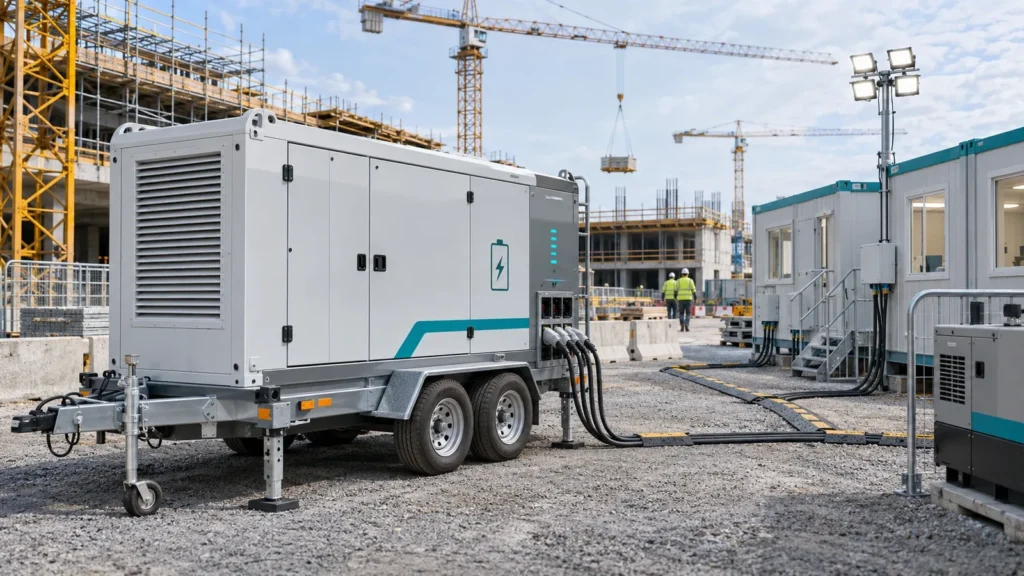
In short: a mobile BESS (mobile battery energy storage system) is a battery system built to be moved: on a trailer, a skid or in a container. It supplies power where the grid is absent, too weak or not yet connected, replacing or supporting diesel generators and powering EV chargers. Hire suits short or uncertain needs; buying suits steady, repeated use. Cost depends on usable energy, power output, hire period, transport and the services included.
Fixed batteries sit behind a site’s meter for years. A mobile BESS does a similar job but moves from site to site as needs change. This guide explains what a mobile battery energy storage system is, how businesses use one and what drives the cost of hiring or buying.
What is inside a mobile BESS?
- Battery modules: usually lithium-ion, rated in kWh of usable energy.
- Inverter: turns stored DC into AC for site loads, rated in kW of continuous output.
- Battery management system: protects the cells and controls charging and discharging.
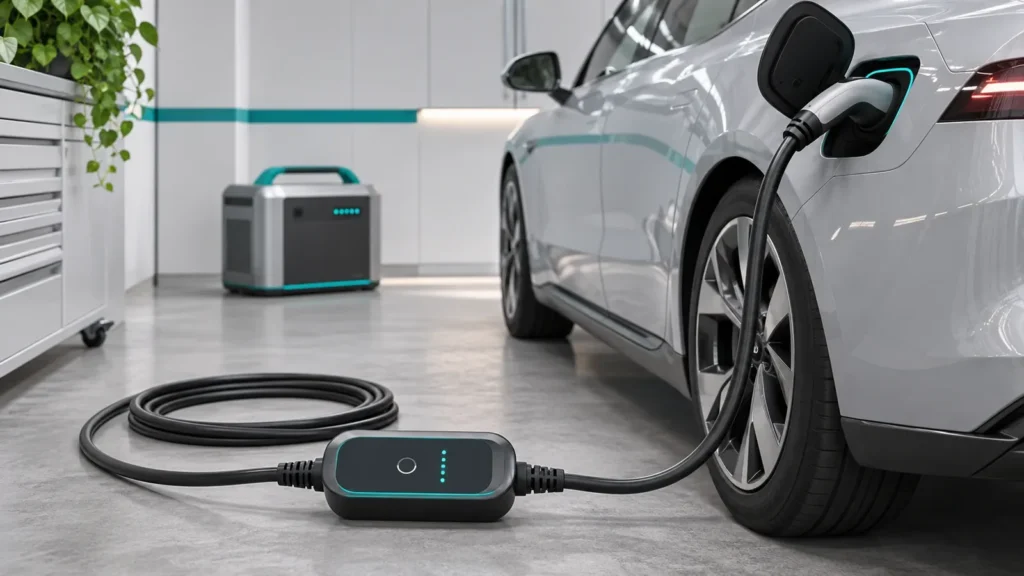
- Outputs: standard industrial sockets, distribution boards and sometimes built-in EV chargers.
- Enclosure and transport: trailer, skid or container, with cooling, protection and lifting points.
- Remote monitoring: state of charge, alarms and usage data.
The technology is the same as any battery energy storage system, packaged for transport and frequent handling. For the wider picture, see mobile energy storage explained.
What is a mobile BESS used for?
| Use | What the mobile BESS does |
|---|---|
| Construction sites | Powers cabins, tools and lighting, quietly and without fuel deliveries |
| Events and filming | Silent power for stages, catering and equipment |
| EV charging without a connection | Supplies chargers at depots or sites waiting for the grid |
| Generator hybrid | Covers low loads so the generator runs only at peaks |
| Grid support and outages | Backup during planned works or faults |
Against a diesel generator, a battery is quiet, produces no exhaust on site and does not waste fuel idling at low load. A generator still wins for long runs with no way to recharge. See battery power units vs diesel generators for the full comparison, and our mobile power page for how we deliver these projects. Diesel has also become dearer for many sites since most sectors lost the right to use rebated red diesel in April 2022.
How do you size one?
- Peak power: the highest load the site will draw at once, in kW. The inverter must handle it, including start-up surges.
- Daily energy: total kWh used per day. This sets usable battery capacity.
- Recharge plan: how the unit will be refilled: a site supply, solar, a generator or swapping units.
- Margin: allow for losses, cold weather and growth.
Should you hire or buy?
| Hire | Buy | |
|---|---|---|
| Suits | Short projects, uncertain demand, trials | Steady use across many projects |
| Upfront cost | Low | High |
| Maintenance | Usually included | Your responsibility, or a service contract |
| Risk | Supplier carries technology and utilisation risk | You carry it, but keep the asset |
What drives mobile BESS price?
Suppliers price mobile BESS hire by the period, and purchase prices vary widely by specification. The main drivers are usable energy, continuous output, built-in EV charging, transport and installation, monitoring, and whether an engineer is on call. Get quotes on a like-for-like specification, and compare against the full cost of the alternative, including fuel and deliveries for a generator. Check the battery warranty terms if you buy.
What safety points apply?
- Placement: level, stable ground, away from escape routes and combustible materials.
- Transport: laden weight, towing limits and safe lifting.
- Fire risk: follow the manufacturer’s guidance and your fire risk assessment for lithium-ion batteries. GOV.UK also publishes health and safety guidance for battery storage systems.
- Electrical: correct earthing and protection for every connection.
Frequently asked questions
What does mobile BESS stand for?
Mobile battery energy storage system: a battery, inverter and controls packaged so they can be moved between sites.
Can a mobile BESS charge electric vehicles?
Yes. Some units have built-in EV chargers; others power separate chargers through their AC outputs.
How long does a mobile BESS run?
It depends on usable energy and load. Divide usable kWh by the average load in kW for a rough runtime, then allow a margin.
Our solution recommendations service sizes mobile BESS options and compares hire, purchase and generator costs. Tell us about your project.