In short: a battery energy storage system, or BESS, stores electricity in batteries and releases it when it is needed. Beyond the batteries themselves, it includes a battery management system, power conversion equipment, controls and safety systems. Businesses use BESS to cut peak electricity costs, support EV chargers on a limited grid connection, store solar power and keep critical loads running. Size it from your load data, and check warranties, safety evidence and approvals before you buy.
Battery storage is growing fast in the UK. The government’s Clean Power 2030 Action Plan expects 23 to 27 GW of battery capacity to help balance the electricity system by 2030. Most of that will be large grid-scale sites, but the same technology is available to businesses on a smaller scale. This guide explains what a BESS is and how businesses use one.
What is inside a BESS?
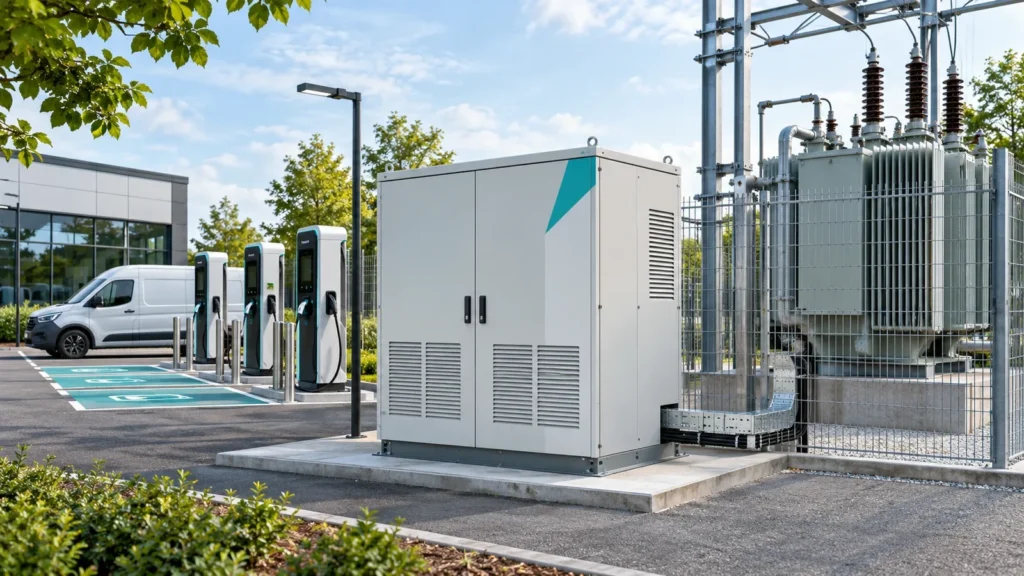
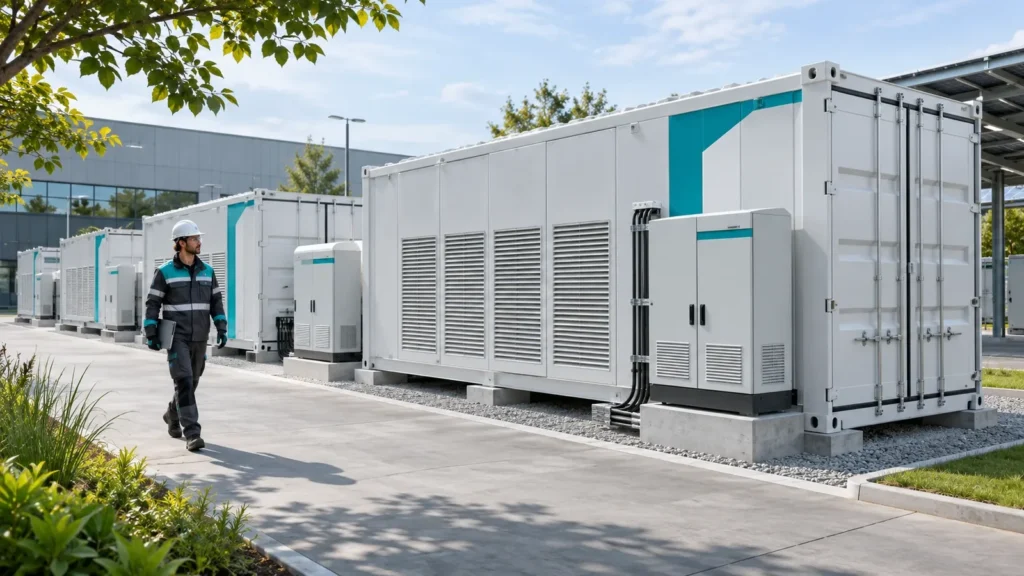
Government guidance on grid-scale storage describes how these systems are built up: individual battery cells are combined to create modules, modules are combined within racks, and racks can be combined into containerised systems with built-in control, protection and safety functions.
| Component | What it does |
|---|---|
| Battery cells, modules and racks | Store the energy |
| Battery management system (BMS) | Monitors and protects the batteries: voltage, temperature and state of charge |
| Power conversion system (inverter) | Converts between the batteries’ DC and the site’s AC supply |
| Energy management system (EMS) | Decides when to charge and discharge, based on prices, loads and limits |
| Cooling, enclosure and fire protection | Keep the system within safe operating conditions |
Our glossary explains related terms such as state of charge, depth of discharge and C-rate.
What do businesses use BESS for?
- Peak shaving: supplying the site during expensive peak periods to cut network and demand costs; see peak shaving with battery storage.
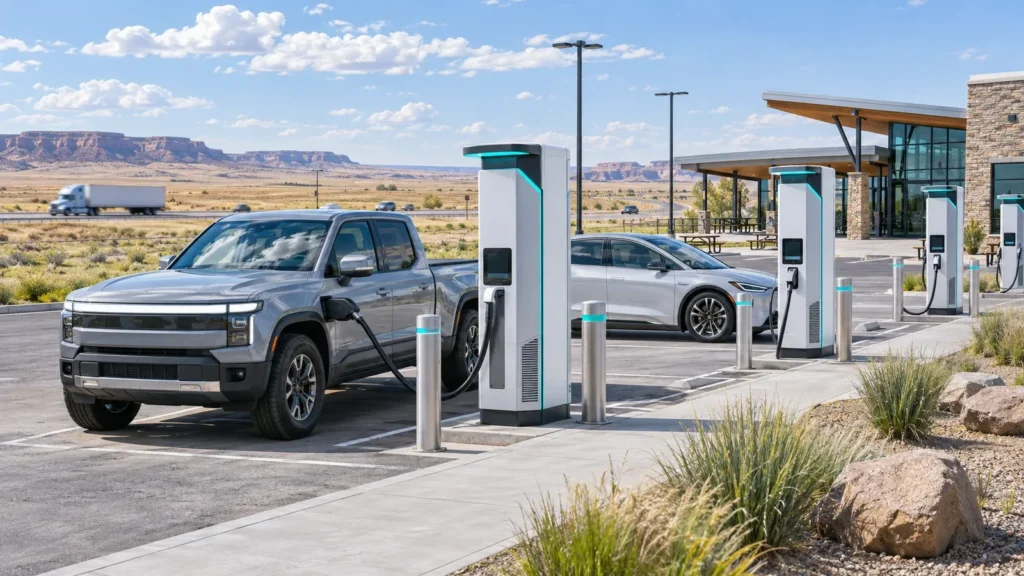
- EV charging on a limited connection: boosting charging power beyond what the grid supply allows; see battery-boosted EV charging.
- Solar self-consumption: storing daytime solar power for the evening; see solar carports with storage.
- Backup: keeping critical loads running during a supply interruption, if designed to do so.
- Flexibility services: earning income by responding to network or system needs, where the setup and market allow.
How do you size a BESS?
Two numbers define a battery system: power (kW), how fast it can charge or discharge; and energy (kWh), how much it can store. Size both from half-hourly meter data and the job you want the battery to do. A battery for peak shaving needs enough energy to cover the peak period; one for EV charging needs enough power to boost chargers and enough energy to cover the busiest charging window.
Before buying, work through the questions to ask first and compare the costs with a grid upgrade using battery storage vs a grid upgrade.
What should you check before buying?
- Warranty: years, cycles or throughput, and guaranteed capacity at the end; see battery storage warranties.
- Safety evidence: fire test results for the system, such as UL 9540A, and a clear emergency plan.
- Approvals: planning, network operator consent and fire service engagement for larger systems; see battery storage planning permission and fire safety.
- Controls: whether the energy management system can do what you need, and integrate with chargers and building systems.
- Service: monitoring, maintenance and support for the system’s life.
Lower-cost options exist too, such as second-life battery storage, but check their testing and warranties carefully.
Frequently asked questions
What does BESS stand for?
Battery energy storage system: batteries plus the controls, power conversion and safety equipment needed to use them.
Is a BESS worth it for a business?
It can be where peak costs are high, the grid connection is limited, or there is solar to store. Model the savings from your own load data before deciding.
Does a BESS need planning permission?
Often, especially for larger or containerised systems. Check with the local planning authority and, for systems of 1 MWh or more, engage the fire and rescue service early.
Our solution recommendations service sizes and specifies battery storage for business sites. Tell us about your site.