In short: workplace EV charging lets staff, visitors and pool vehicles charge while parked at work. Most sites need AC chargers, because cars stay for hours, with load management so the building’s supply is not exceeded. Decide who pays for the electricity, choose chargers that meet the UK smart charging rules and support open software standards, and check whether the government’s Workplace Charging Scheme grant of up to £500 per socket applies before you install.
Workplace charging is often the first charging a business installs. It supports staff who cannot charge at home, prepares for electric pool and fleet vehicles, and can be a visible part of a sustainability plan. This guide covers the decisions in order.
Who will use the chargers?
Start with the users, because they decide everything else.
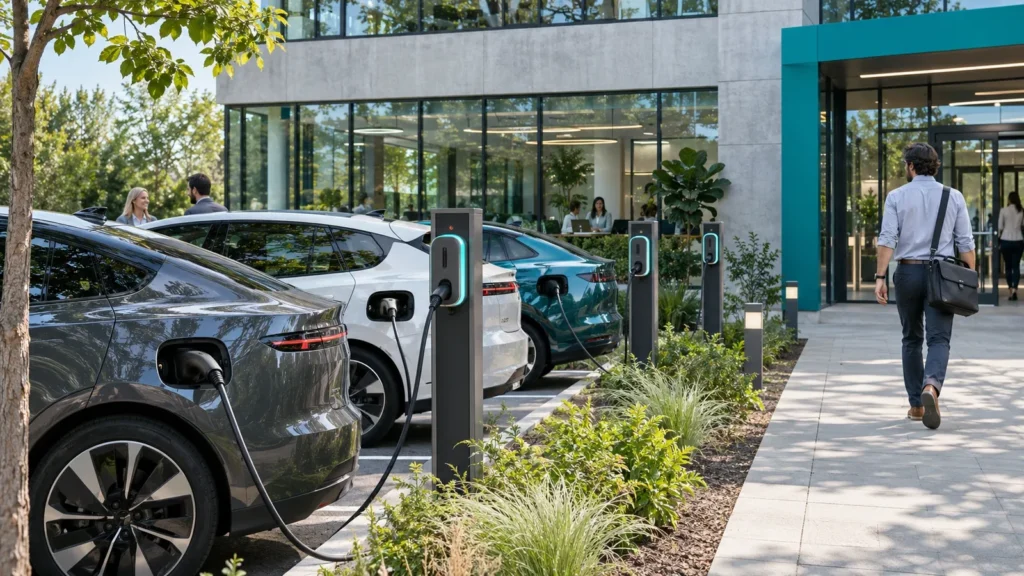
- Staff: parked for most of the working day, so a modest AC charger is plenty.
- Visitors: shorter stays; a few higher-power chargers may help.
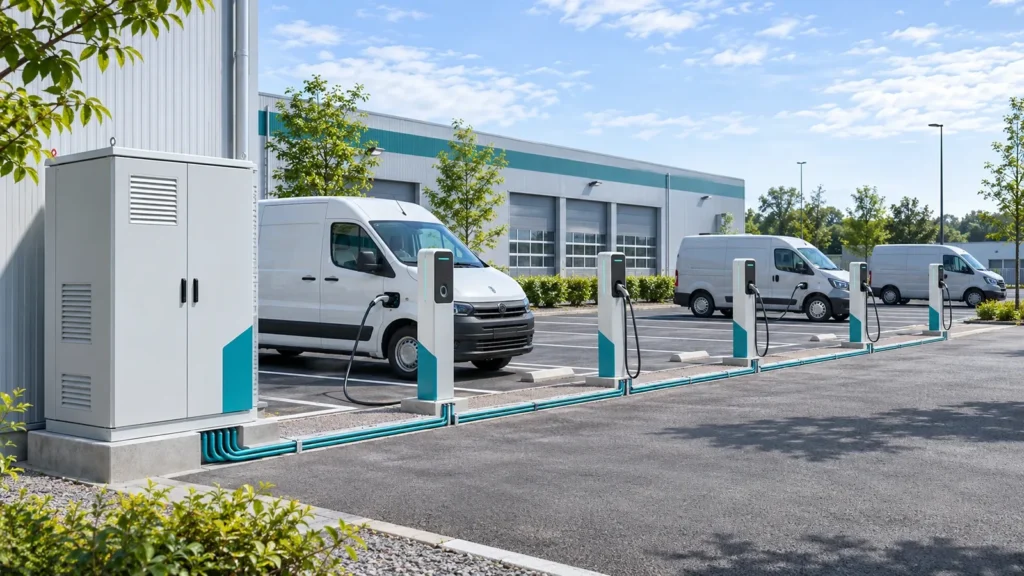
- Pool or fleet vehicles: need guaranteed charging, often overnight; treat them as a small depot. See our guide to fleet depot charging.
How many chargers, and how powerful?
Because cars stay for hours, power per charger matters less than the number of bays with access to charging. Start with the number of electric vehicles you expect in the next few years, install chargers for today’s demand, and lay ducting and cabling for future bays while the ground is open. If the workplace is a new building or a major renovation, check the minimum requirements in Part S of the Building Regulations.
Load management lets many chargers share the building’s spare capacity without a grid upgrade. Our article on load management explains how it works.
Which rules apply?
- Smart Charge Points Regulations: workplace chargers for cars and vans are in scope, unless they are public or rapid. They must have smart functionality, default off-peak charging hours and security features. GOV.UK sets out the requirements.
- Installation: must meet BS 7671, the IET wiring regulations, which include specific requirements for EV charging.
- Public access: if you open chargers to the public, the Public Charge Point Regulations also apply.
Is there a grant?
Yes, for eligible organisations. The Workplace Charging Scheme provides up to £500 per socket towards the cost of installing chargepoints at workplaces, for up to 40 sockets across all your sites. Businesses, charities and public sector organisations can apply. The government has said funding is available until 31 March 2027, so check the current terms and deadlines before you plan around it.
Who pays for the electricity?
Decide this before you choose software, because it affects what the system must do. Write the answer into a short workplace EV charging policy, covering who can charge, when, at what price and how bays are shared.
| Approach | What you need |
|---|---|
| Free charging as a staff benefit | Access control and usage reports; check the tax position with your adviser |
| Staff pay per kWh | Software with tariffs and payment, and a clear pricing policy |
| Pool vehicles only | Access limited to fleet vehicles, with priority scheduling |
| Mixed use | Different tariffs and priorities for staff, visitors and fleet |
Software that supports OCPP lets you change provider later without replacing chargers. See choosing charge point management software.
Checklist
- Expected electric vehicles now and in three to five years.
- Building capacity, from half-hourly meter data.
- Charger locations, with ducting for future bays and accessible bays.
- Smart charging compliance and OCPP support.
- Payment policy and software.
- Grant eligibility and timing.
- Maintenance and support arrangements.
Our EV charger requirements checklist covers hardware choices in more detail.
Frequently asked questions
Do workplace chargers need to be fast?
Rarely. Cars parked for a working day can be charged well by AC chargers. Spend the budget on more bays instead.
Can staff charge for free?
Many employers offer it as a benefit. Check the tax treatment and set a fair-use policy.
Do I need a grid upgrade?
Often not, if load management shares the building’s spare capacity. Check meter data before assuming an upgrade is needed.
Our solution recommendations service designs workplace charging around your site and staff. Tell us about your workplace.