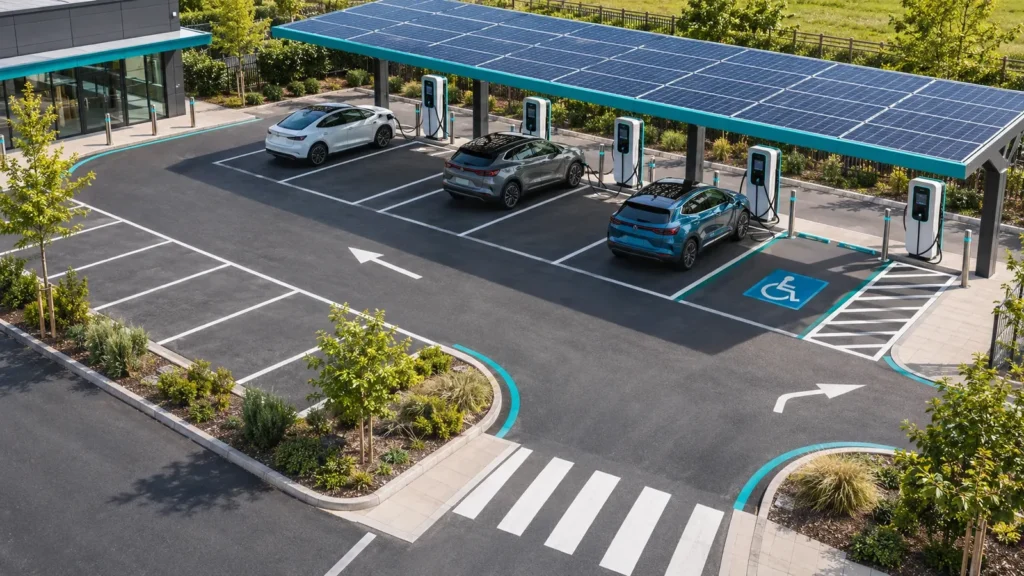
In short: the cost of commercial EV charging depends far more on the site than on the charger. The biggest swings come from the grid connection, the distance from the supply to the bays, groundworks, and whether you choose AC or DC. Software, maintenance and electricity then add running costs every year. Get the site surveyed and the connection checked before you compare quotes, and compare offers on total cost over the years you will use them.
“How much does a commercial charger cost?” has no single answer, because two sites with identical chargers can differ hugely in total cost. This article explains what drives the price, so you can budget sensibly and spot quotes that leave things out.
What makes up the cost?
| Cost element | What drives it |
|---|---|
| Chargers | AC or DC, power, number of outlets, features such as payment terminals |
| Electrical works | Switchgear, distribution boards, cable size and length |
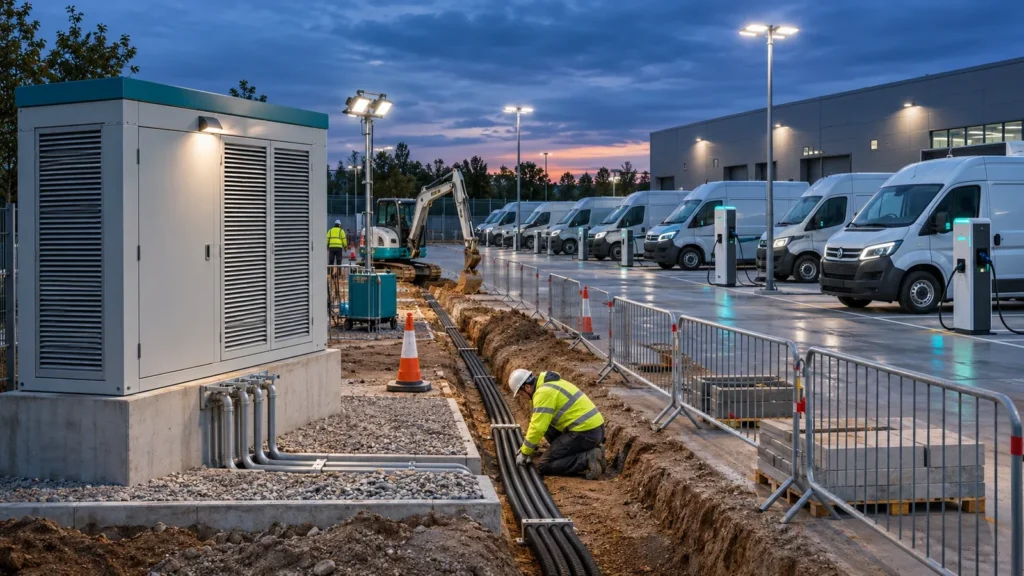
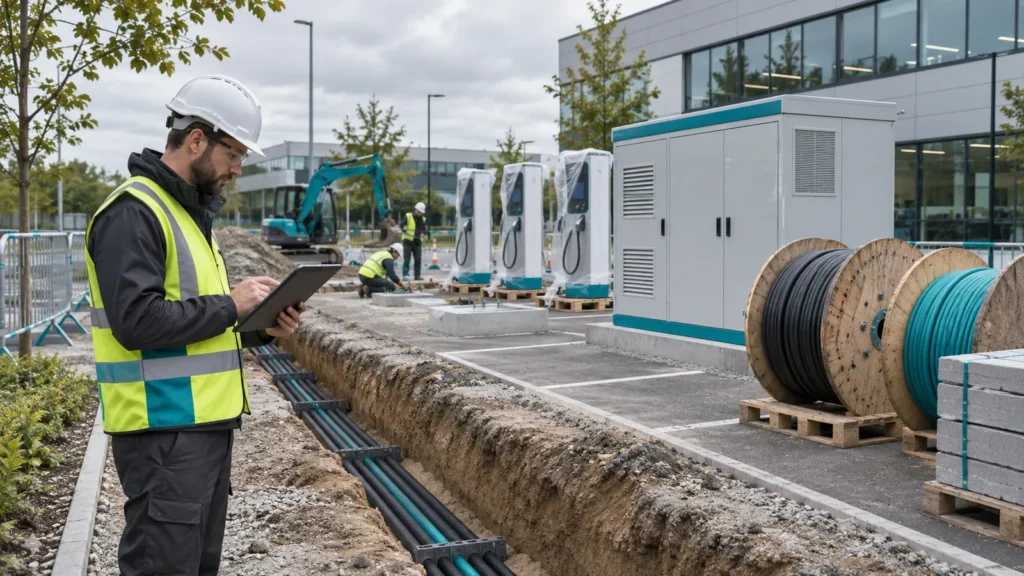
| Groundworks | Trenching, ducting, foundations, resurfacing, bay markings |
| Grid connection | Spare capacity on site, and any upgrade or new connection needed |
| Software | Set-up and ongoing fees per charger |
| Commissioning and certification | Testing, documentation, network operator notification |
| Running costs | Electricity, maintenance, software, insurance and repairs |
Why does the grid connection matter so much?
If the site has spare capacity, charging can often use it with load management, and the connection cost is small. If not, an upgrade can be the largest single cost and the longest lead time. Connection charges for demand customers changed in April 2023: under Ofgem’s access reforms, they no longer pay a proportion of reinforcement costs upstream of their connection, unless the project crosses a high-cost threshold. An older quote may therefore overstate today’s cost.
Before paying for an upgrade, look at the alternatives in options while you wait for a grid connection and compare them using battery storage vs a grid upgrade.
How much do AC and DC choices change the cost?
DC chargers cost much more than AC chargers to buy and install, and they need heavier cabling, more grid capacity and more maintenance. For vehicles parked for hours, AC with load management is usually the cheaper way to deliver the same energy. Our guide to AC vs DC charging explains when DC is worth it.
Where do quotes hide costs?
- Groundworks priced as “provisional” or excluded.
- Distance from the supply to the bays underestimated.
- Grid connection left as the client’s responsibility.
- Software priced for the first year only.
- Maintenance not included, or limited to the warranty period.
- Network operator notification or approval not mentioned.
Ask every installer to price the same specification, item by item. Our guide to writing a charger tender shows how, and commercial EV charger installation sets out each stage of the work.
How do grants change the cost?
Grants can reduce the capital cost substantially. The Workplace Charging Scheme, for example, provides up to £500 per socket for eligible organisations, and the Depot Charging Scheme supports depots for vans, coaches and HGVs. Check the rules before work starts; see EV charging grants for businesses.
How should you compare costs?
Compare total cost over the years you will keep the chargers: purchase, installation, connection, software, maintenance, electricity and the cost of downtime. A cheaper installation with high running costs or weak service terms often costs more in the end. Our total cost of ownership model shows the method with a worked example.
Frequently asked questions
Why do quotes for the same chargers vary so much?
Usually because of different assumptions about groundworks, cable runs, the grid connection and what is included. Ask for item-by-item pricing against one specification.
Is the grid connection included in installation quotes?
Often not. Check whether the installer has assessed site capacity and whether any network work is included or excluded.
What is the cheapest way to add charging?
Usually AC chargers on existing spare capacity, with load management to share it. Add DC only where vehicles genuinely need it.
Our procurement and supplier selection service checks quotes and brings hidden costs into the open. Send us the quotes you have.