In short: electric buses mostly charge overnight at the depot, so the depot’s grid connection, layout and charging schedule decide how many vehicles you can run. Plan the power first, then the bays, then how buses are parked and plugged in. Coaches are harder because they travel further and cannot rely on charging at their destination, so coach operators need a route-by-route energy check before choosing vehicles.
Bus and coach operators face the same core question as van fleets, but with bigger numbers: much larger batteries, tighter timetables and depots where every metre of yard space is used. This article sets out what to plan, and in what order. It covers electric bus charging at the depot and on route, and what changes for coaches.
How fast is the bus fleet changing?
Quickly, and with public money behind it. The government’s Zero Emission Bus Regional Areas scheme, known as ZEBRA, provides funding to local transport authorities to introduce zero-emission buses and the infrastructure needed to support them. In its first standard round, £198 million went to 12 authorities, and the second programme set out up to £142.8 million to support up to 955 more zero-emission buses and associated infrastructure across 25 areas.
Demand is expected to keep growing. The Department for Transport’s order pipeline forecasts an estimated 23,381 zero-emission buses ordered between 2026 and 2035.
Regulation is following. After consulting on ending the sale of new non-zero-emission buses, the government said it would bring forward a measure that, from 2030 at the earliest, will prevent the use of new non-zero-emission buses on local bus services in England. For coaches and minibuses, it said only that it is considering how to support those sectors to decarbonise.
Depot charging or opportunity charging?
Most electric buses charge at the depot overnight, plugged in after the last service and ready for the morning run-out. It is the simplest and usually the cheapest approach, because buses are parked for many hours and electricity is cheaper overnight.
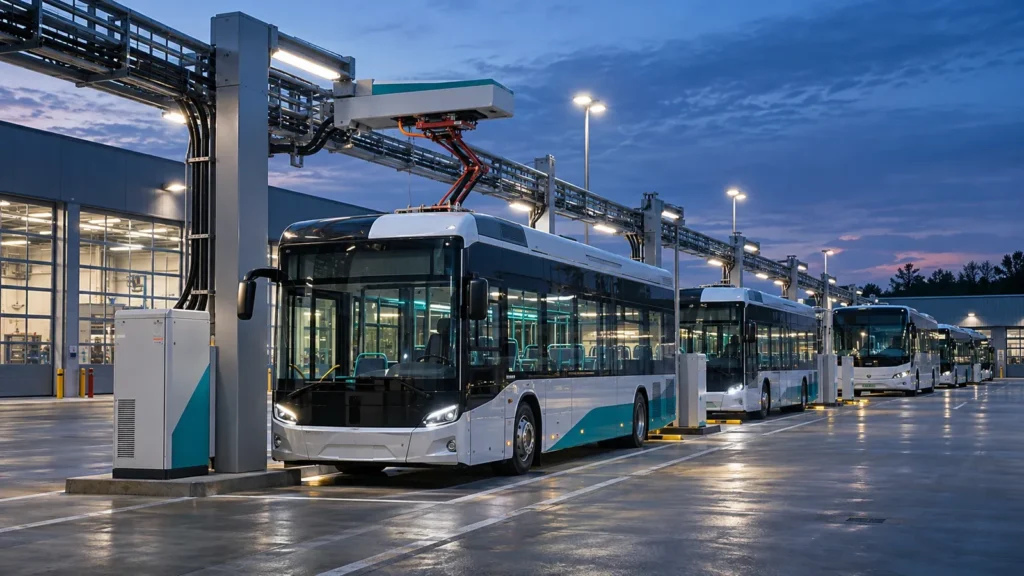
Opportunity charging tops buses up during the day, for example at a route terminus, often using a pantograph lowered from a mast onto the bus roof. It lets operators run longer duties or use smaller batteries, but it needs high-power equipment on street, coordination with highway authorities and a reliable connection at each charging point. For most operators it supplements depot charging rather than replacing it.
Step 1: How much energy does each duty need?
Start with the timetable, not the vehicle brochure. For each duty, work out the distance, the expected energy use in winter with heating on, and a reserve for diversions and delays. Compare that with the usable battery capacity, allowing for battery ageing. Duties that fit comfortably go electric first; duties that do not either need opportunity charging, a mid-day return to the depot, or a different vehicle.
Step 2: Can the depot supply the power?
A full electric bus depot usually needs far more power than the site was built for. Ask the network operator early and request a formal connection offer, not just an estimate. If capacity is limited or late, the options we describe in what to do while you wait for a grid connection apply here too: right-size the request, consider a flexible connection, and use smart scheduling so buses do not all charge at full power at once.
Because buses return in waves and leave on a fixed schedule, charging can be planned precisely. Load management that prioritises buses by departure time often reduces the connection needed; see load management for depots.
Step 3: How will buses be parked and plugged in?
Yard layout matters as much as electrical design. Buses are often parked nose to tail in lanes, which makes plugging in awkward and can block vehicles in. Options include:
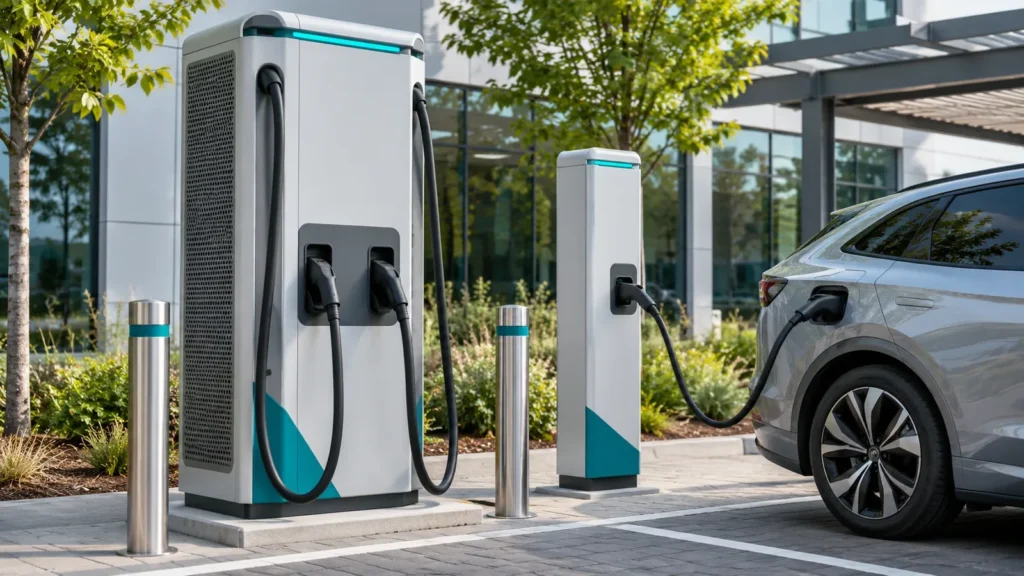
- Distributed systems with a central power cabinet and slim dispensers between lanes, which save space; see distributed vs standalone chargers.
- Overhead cable management or depot pantographs, which keep cables off the ground and speed up plugging in.
- Clear parking rules, so the first bus out is never trapped behind one that is still charging.
Walk the depot at night with the people who park the buses before finalising the design.
Why are coaches harder?
Coaches travel further, often on irregular itineraries, and spend time at destinations where operators have no control over charging. A school or tour coach may sit at a venue for hours with no charger nearby. That makes route-by-route energy planning essential, and it means coach depots may need higher-power charging to turn vehicles round between long trips.
Funding can help. The government’s Depot Charging Scheme lists coaches alongside vans and HGVs, and in March 2026 it announced that businesses and public authorities could save up to £1 million, covering up to 70% of the cost, when installing charging infrastructure for these vehicles. Our Depot Charging Scheme explainer lists what to check before applying.
Planning checklist
| Area | What to settle |
|---|---|
| Duties | Winter energy per duty, reserve, which duties go electric first |
| Power | Connection size and date, flexible options, load management |
| Layout | Parking pattern, dispenser positions, cable management |
| Charging strategy | Depot only, or depot plus opportunity charging |
| Operations | Who plugs in, how faults are reported, fallback if a charger fails |
| Funding | ZEBRA through your local transport authority, or the Depot Charging Scheme |
For the full depot method, including procurement and phasing, read our complete guide to fleet depot charging.
Frequently asked questions
Do electric buses need opportunity charging?
Not usually. Most duties can be covered by overnight depot charging. Opportunity charging helps with long or intensive duties, or where smaller batteries are preferred.
How early should a bus operator talk to the network operator?
As soon as the fleet plan is known. Large depot connections can take a long time, and early contact gives more options.
Can coach operators use public chargers?
Sometimes, but many public sites are not designed for coaches. Plan routes around depots and destinations you can rely on.
Our solution recommendations service models duties, depot power and layout for bus and coach fleets. Tell us about your operation.