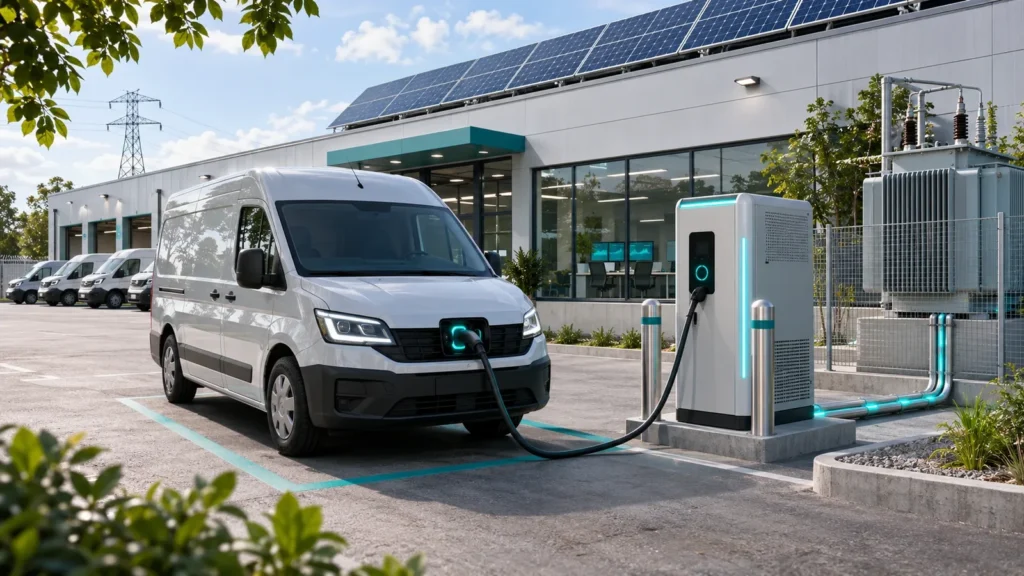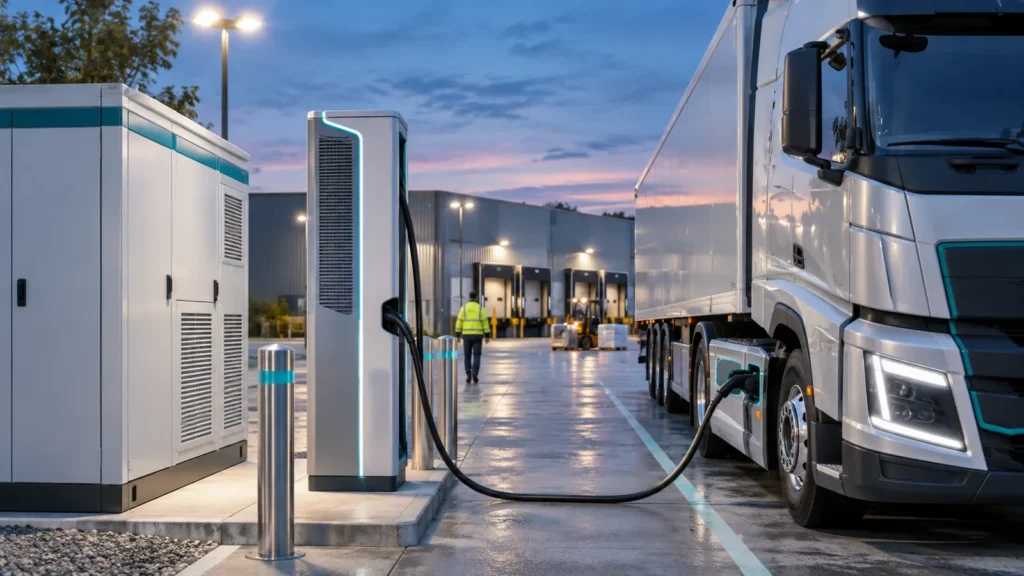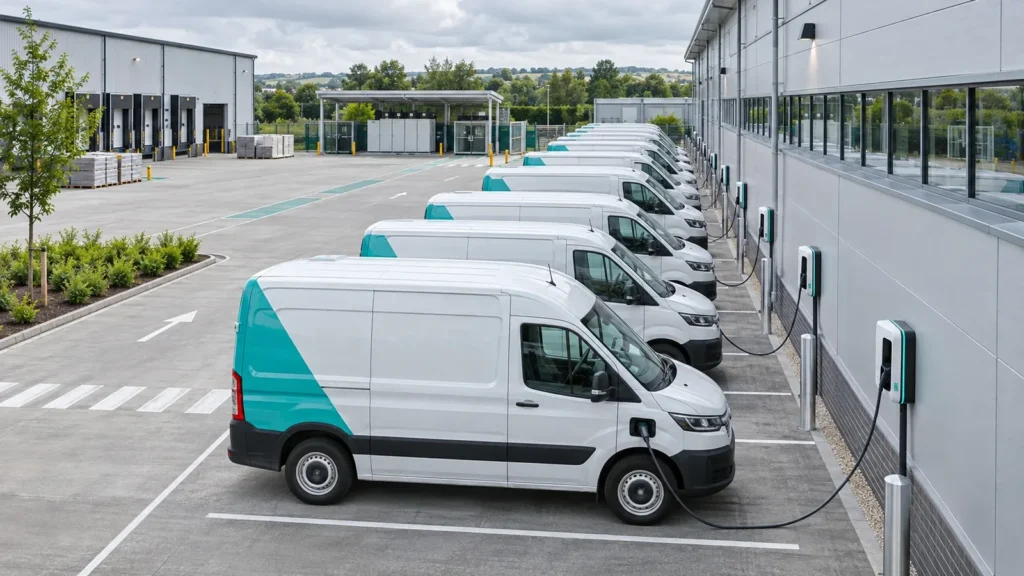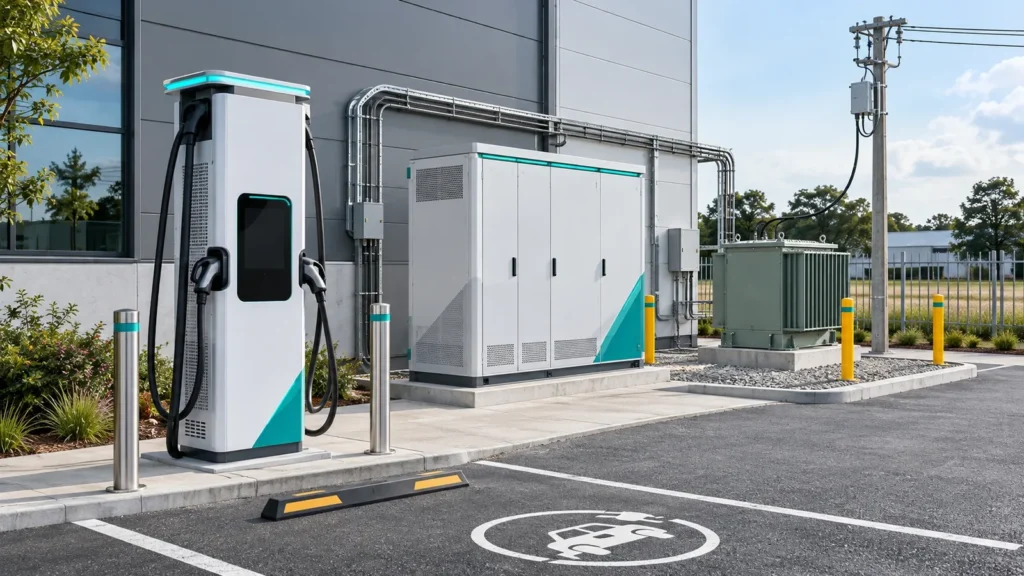
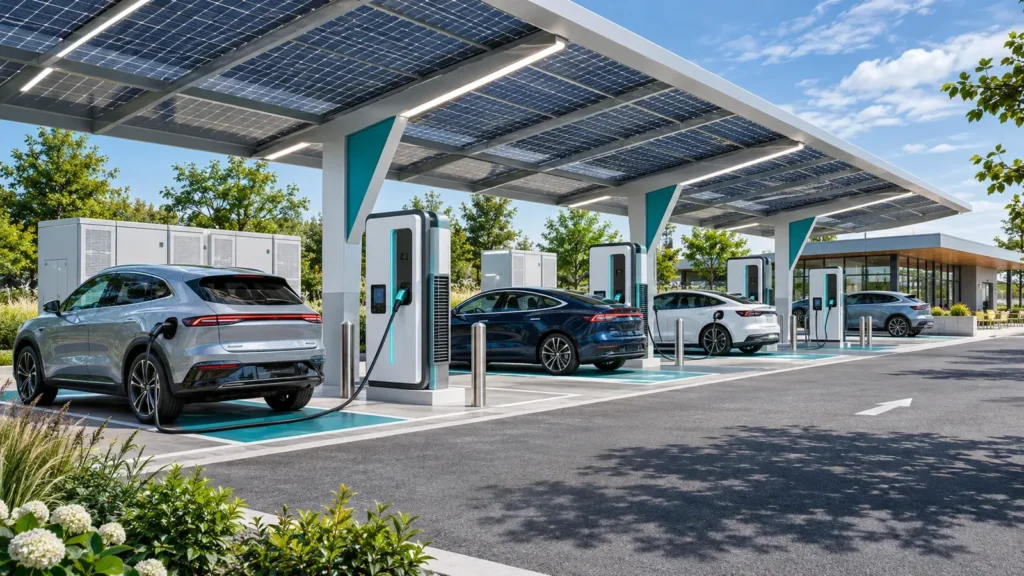
In short: a successful ultra-fast charging hub is planned around drivers and power, not around the chargers. Estimate how many vehicles will arrive at the busiest hour and how long each stays, size the bays so queues stay short, then match charger power to what visiting vehicles can actually accept. Secure the grid connection early, consider storage where it is limited, and design for reliability from day one, because public rapid networks in Great Britain must meet a 99% reliability standard.
Ultra-fast charging hubs, with several high-power chargers in one place, are where much public charging investment is going. They are also expensive, power hungry and judged harshly by drivers when they fail. This guide covers the decisions that shape a hub, from site choice to service.
What counts as an ultra-fast hub?
There is no single legal definition, but the industry generally uses “ultra-fast” or “high-power” for DC charging of about 150 kW and above. Hyundai’s glossary, for example, defines ultra-fast charging as power in the range of 150 kW to 350 kW. In Great Britain’s public charging regulations, anything of 50 kW or more is a “rapid” charge point, so ultra-fast hubs fall under the rapid rules.
Who will use the hub, and when?
Demand drives everything else. Look at traffic past the site, the dwell time the location naturally offers (a coffee stop, a supermarket shop, a driver’s break), and the types of vehicle you expect: private cars, taxis, vans or trucks.
The key planning figure is the busiest hour. Hubs are often quiet for much of the day and full at a few predictable times. If you size for the average, drivers will queue at the peak; if you size for the absolute maximum, bays will sit idle. For residents without driveways, councils usually start with slower on-street charging instead.
How many bays do you need?
A simple way to start is to estimate the arrivals in the busiest hour and the average time each vehicle stays plugged in. The number of bays busy at once is roughly arrivals per hour multiplied by hours per visit.
| Illustrative example | Value |
|---|---|
| Vehicles arriving in the busiest hour | 24 |
| Average time plugged in | 25 minutes (0.42 hours) |
| Average bays busy at once | About 10 |
| Bays to plan, allowing for bunching and faults | 12 to 14 |
Arrivals bunch together, so you need headroom above the average, plus allowance for a charger being out of service. These figures are assumptions to show the method; use traffic and usage data for your site.
How much power should each charger have?
Faster chargers only help vehicles that can accept the power. Peak rates vary widely even within one brand: Kia’s UK charging table lists about 128 kW for its smaller models and 258 kW for the EV6. IONITY notes that its 350 kW chargers exceed the maximum charging capacity of most cars currently on the market. Power also falls as the battery fills, so the peak figure is reached only for part of a session.
For many hubs, chargers that share power between outlets give the best balance: a vehicle that can take high power gets it, while one that cannot leaves the capacity for others. We compare charger sizes in detail in 150 kW vs 350 kW chargers, and shared-power designs in distributed vs standalone chargers.
Can the grid supply it?
A hub with a dozen high-power bays needs a large connection, often at high voltage with its own substation. That is usually the longest lead time in the project. Engage the network operator at site selection stage, and ask for a formal connection offer so you have a cost and date you can rely on.
Size the request carefully. Because not every bay draws full power at once, a smaller connection with power sharing may serve the same drivers. If the connection is limited or late, a battery can supply part of each peak; see why battery-boosted EV charging matters. To test whether the hub pays back, try our charging hub payback calculator.
What do the rules require?
Public rapid charge points in Great Britain must meet the Public Charge Point Regulations 2023. Among other things, operators must achieve 99% reliability across their rapid network, offer contactless payment, display prices in pence per kWh, provide open data and run a free 24-hour helpline. Design the hub so it can meet these from opening day.
Accessibility matters too. PAS 1899 from the British Standards Institution sets out how to make public charge points accessible. Build it into the layout from the start, because retrofitting accessible bays is costly.
How do you keep it working?
Reliability is designed in, not added later. Choose hardware with a service record you can check, specify remote monitoring, keep critical spares on site or nearby, and contract for fast response and repair. Our guide to charger uptime and service levels explains what to put in the contract.
Site details matter as much: lighting, CCTV, cable management that keeps connectors off the ground, protection against vehicle impact, and enough space for drivers to reach the cable without blocking the next bay.
Planning checklist
| Area | Questions to answer |
|---|---|
| Demand | Busiest-hour arrivals, dwell time, vehicle mix |
| Bays | Number, layout, accessible bays, room for larger vehicles |
| Power | Charger size, power sharing, connection size and date |
| Storage | Needed for a limited or late connection, or for peak costs? |
| Compliance | Reliability, payment, pricing, open data, helpline, accessibility |
| Operations | Monitoring, spares, response and repair times, site security |
Frequently asked questions
Should every bay be 350 kW?
Rarely. Most vehicles cannot use that much power, and the extra cost and grid capacity may never pay back. Power-sharing chargers let a few vehicles use high power when they can.
How long does it take to build an ultra-fast hub?
The grid connection usually sets the pace. Equipment and construction can take months, but a new high-voltage connection can take much longer, so start that conversation first.
Do I need a battery at an ultra-fast hub?
Not always. It helps when the connection is limited or late, or when peak electricity costs are high.
Our solution recommendations service sizes hubs from demand, grid and budget. Tell us about your site.