In short: battery power suits events because most event loads are light for long periods with short peaks, exactly where diesel generators run least efficiently. Size the battery on two numbers: the highest power you need at any moment (kW) and the total energy over the event day (kWh). Then plan how it will be recharged, whether from a grid supply, solar or a small generator in a hybrid. Measure real loads at a previous event if you can, because guesses usually oversize the kit.
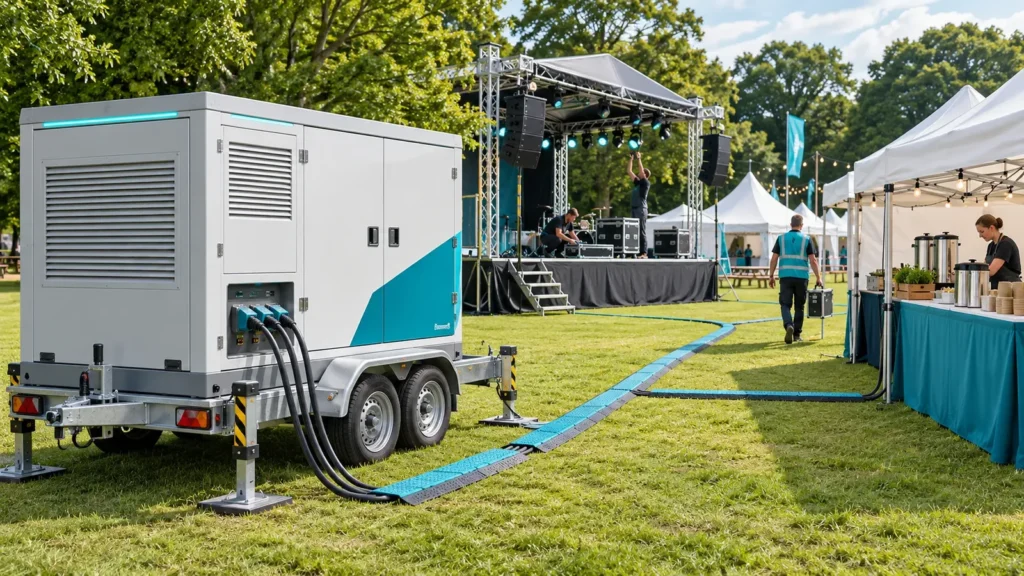
Festivals, sports events, film sets and outdoor productions have long relied on diesel generators. Batteries and hybrids now offer quieter, cleaner power, often at lower running cost. This guide covers how to size and plan battery power for an event.
Why does battery power suit events?
Event power has a distinctive pattern. A stage, catering unit or production base may need high power for short spells, but runs at a fraction of that for hours: overnight lighting, security cabins, refrigeration, phone charging. A generator sized for the peak spends most of its time lightly loaded, which wastes fuel and can cause maintenance problems.
A battery delivers power efficiently at any load and makes no noise or exhaust at the point of use. That matters near audiences, residents and microphones. Diesel costs have also risen for many users since most sectors lost the right to use rebated red diesel from April 2022.
How do you size the battery?
You need two figures for each location on site.
| Figure | Why it matters | How to get it |
|---|---|---|
| Peak power (kW) | Sets the inverter size, so the system does not trip when everything switches on | Equipment ratings, plus start-up surges from motors and compressors |
| Daily energy (kWh) | Sets the battery capacity needed between recharges | Logged data from a previous event, or each load’s power multiplied by its hours of use |
Logging is worth the effort. Many event power plans add up nameplate ratings and assume everything runs at once, which leads to oversized equipment. A week of logged data from a similar event shows the real peak and the real daily energy.
How will it be recharged?
- Grid supply: if the venue has even a small connection, a battery can charge from it overnight and deliver much higher power during the day.
- Swap and recharge: units are taken off site to charge and replaced, which needs careful logistics.
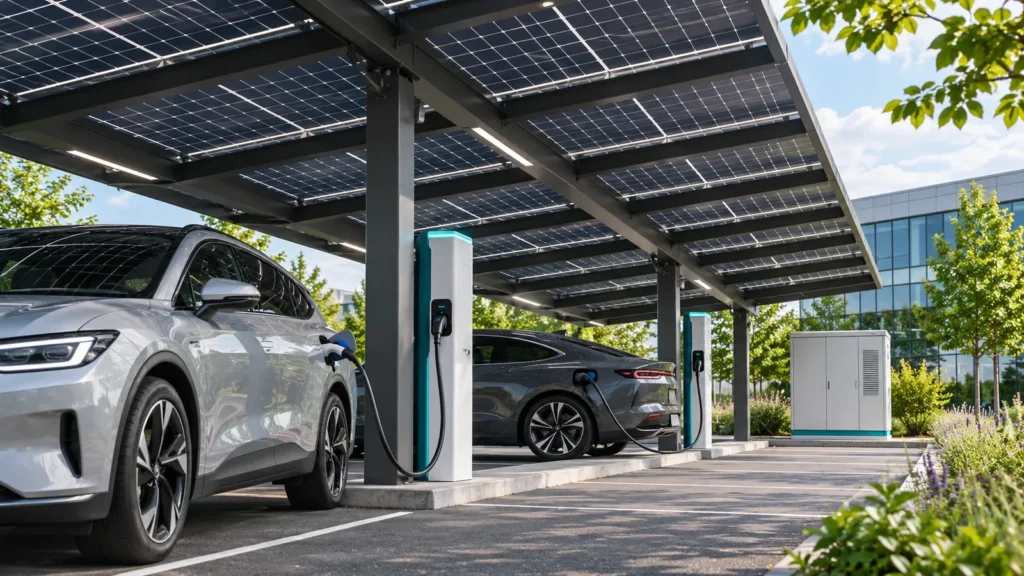
- Solar: useful for longer events and daytime loads, but rarely enough on its own in the UK.
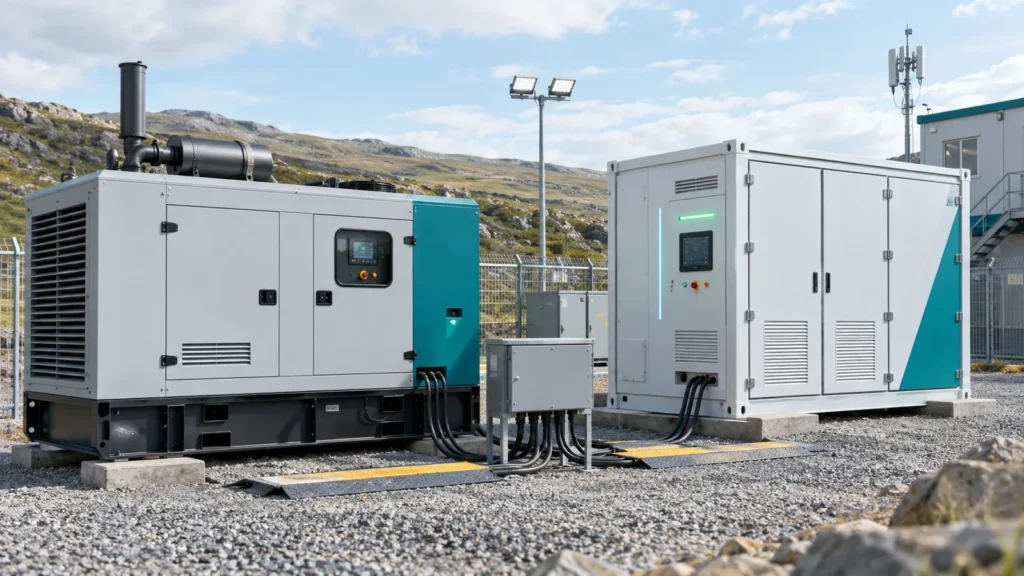
- Hybrid with a generator: a smaller generator runs only when the battery needs topping up, at an efficient load.
Hybrids can save a lot of fuel. A Purdue University study modelling battery-diesel systems found that a right-sized hybrid could cut costs by more than 50% compared with a generator alone. That is a modelled result, so test it against your own loads.
What about rules on site?
In London, emissions rules for non-road mobile machinery apply to engines rated from 37 kW to 560 kW, according to the Greater London Authority, and generators on construction sites must meet them. Venues and local authorities may set their own conditions on noise and emissions for events too. Battery power avoids many of these issues at the point of use.
Batteries bring their own safety requirements. Ask the supplier for the system’s certification, its fire protection and emergency procedures, and the safe distances and ventilation it needs. Brief site crews on isolation and what to do if a unit is damaged.
What logistics should you plan?
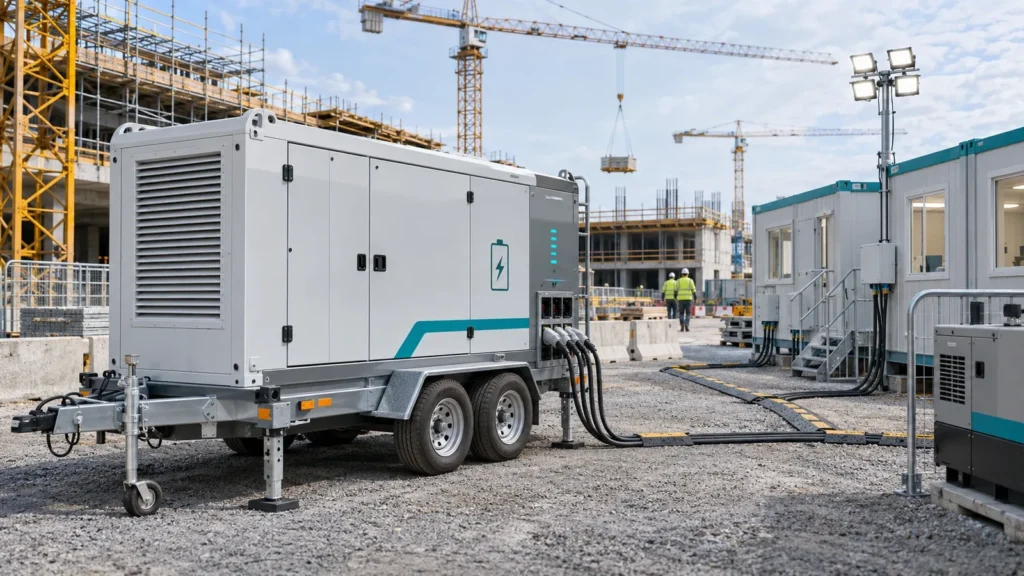
- Weight and access: battery units are heavy. Check ground conditions, crane or forklift needs and towing arrangements.
- Distribution: place units close to loads to keep cable runs short.
- Monitoring: remote monitoring of charge level and load lets the power team act before anything runs out.
- Backup: for critical loads such as medical, security or broadcast, plan a second source.
For the technology itself, see mobile energy storage explained, and for a head-to-head with diesel on construction and temporary sites, battery power units vs diesel generators.
Event power checklist
| Step | Done? |
|---|---|
| Log loads at a previous or similar event | |
| Set peak kW and daily kWh for each location | |
| Choose the recharge method: grid, swap, solar or hybrid | |
| Check venue and local rules on noise and emissions | |
| Confirm safety certification and site procedures | |
| Plan transport, access, cabling and monitoring | |
| Arrange backup for critical loads |
Frequently asked questions
Can batteries power a whole festival?
Sometimes, with grid charging or a hybrid. For large stages, a hybrid of batteries and a smaller generator is often the practical choice.
Should I hire or buy battery units?
Hire suits occasional events. Buying can pay off for organisers or production companies running many events a year, if the units are used often.
Is battery power really quieter?
Yes. A battery makes little noise beyond cooling fans, so it can sit much closer to audiences and residents than a generator.
Our solution recommendations service sizes battery and hybrid power from real load data. Tell us about your event.