
Mobile EV charging
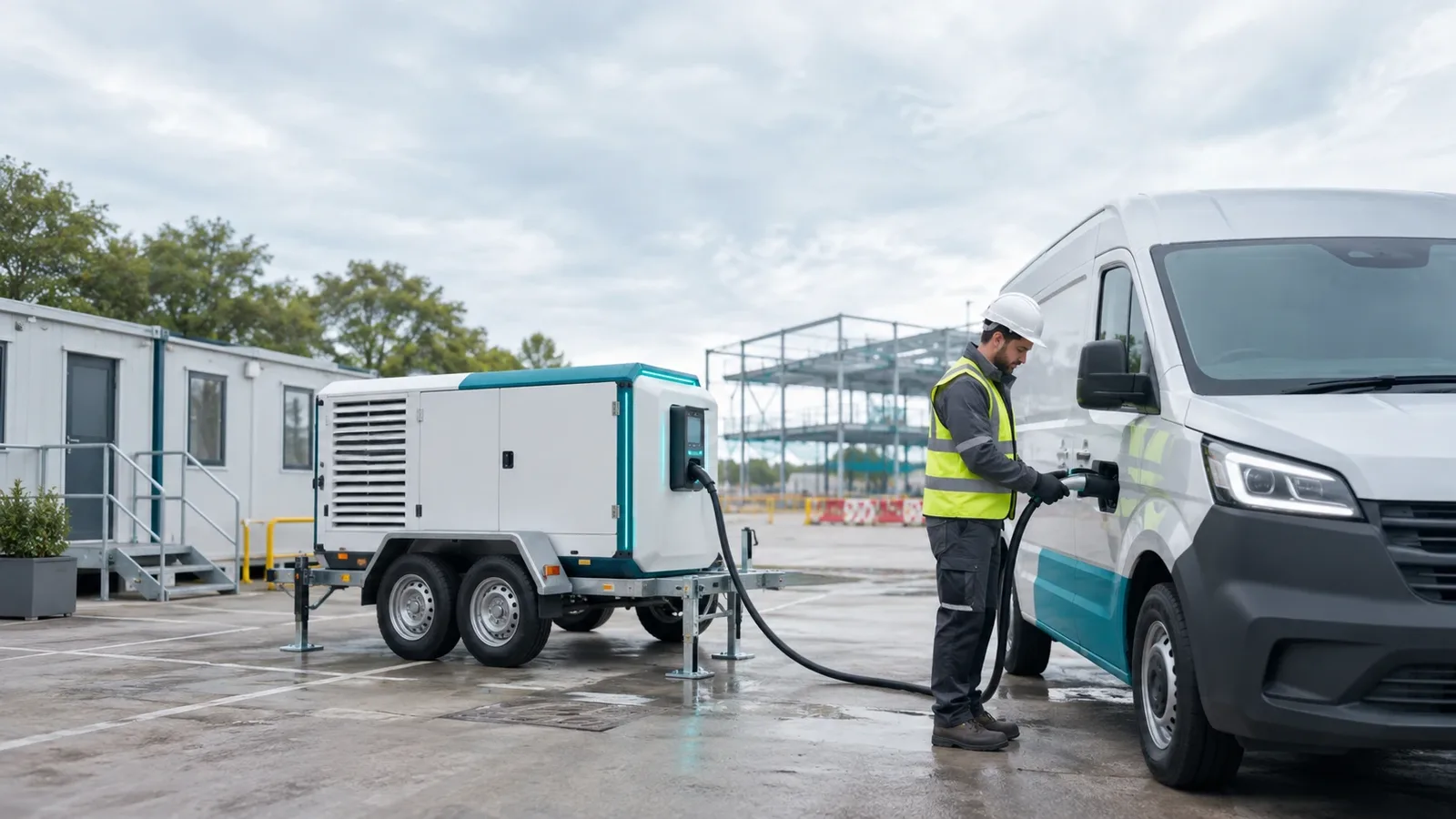
Battery-powered chargers on trailers, vans or skids bring charging to vehicles instead of the other way round. They keep fleets moving while depots wait for power and serve events, temporary sites and recovery work. We help you decide whether mobile charging fits, specify the right units and plan how they run day to day.
The technology
How mobile EV charging works
What it is
A battery and charger built into a trailer, van or skid
Charged where power is available, used where it is needed
AC or DC output, depending on the unit
Managed through software, like a fixed charger
What decides performance
Usable energy per shift, not the nameplate figure
Continuous output, not peak output
Recharge time and the supply available
Connectors, software and how the unit is moved
The complexities
What makes it hard to get right
Technical
Matching energy per shift to real vehicle needs
Recharging fast enough to keep units in service
Battery ageing and its effect on usable energy
Integration with your back office and payments
Practical and commercial
Weight, towing rules and who can move the unit
Hire or buy as your needs change
Staff time to deploy, connect and recharge
Which charging rules apply when serving the public
Where it fits
When mobile charging is the right answer
A good fit when
A depot is waiting for its grid connection
Charging is needed at events, film sets or temporary sites
Vehicles need recovery or roadside top-ups
You want to pilot electric vehicles before fixed charging
Think twice when
A large fleet needs energy every night for years
A fixed connection is available soon at a sensible cost
Nobody will own moving and recharging the units
How we deliver
Our services for mobile EV charging
Solution recommendations
We size mobile units against your shifts and compare them with fixed, storage-backed and flexible-connection options.
Procurement and supplier selection
We specify units, compare hire and purchase offers and write service terms you can enforce.
OEM and ODM support
We help brands develop mobile charging products with the right manufacturer and certification plan.
Market entry strategy
We assess demand, rules and partners for mobile charging services in new markets.
Go-to-market strategy
We shape the proposition, pricing and target customers for mobile charging services.
Further reading
Insights on mobile EV charging
Insight
Mobile EV charging: what to check before you hire or buy
The six checks that decide whether a unit does the job.
Insight
Starting a mobile EV charging business
Customers, business models, equipment and rules.
Insight
Waiting for a depot grid connection?
Your options while the power is on its way.
Insight
Mobile energy storage: what is it?
The battery technology behind mobile chargers.
Talk to us about mobile EV charging
Tell us about your vehicles, site and plans. We will tell you plainly whether mobile EV charging fits, and what it will take.