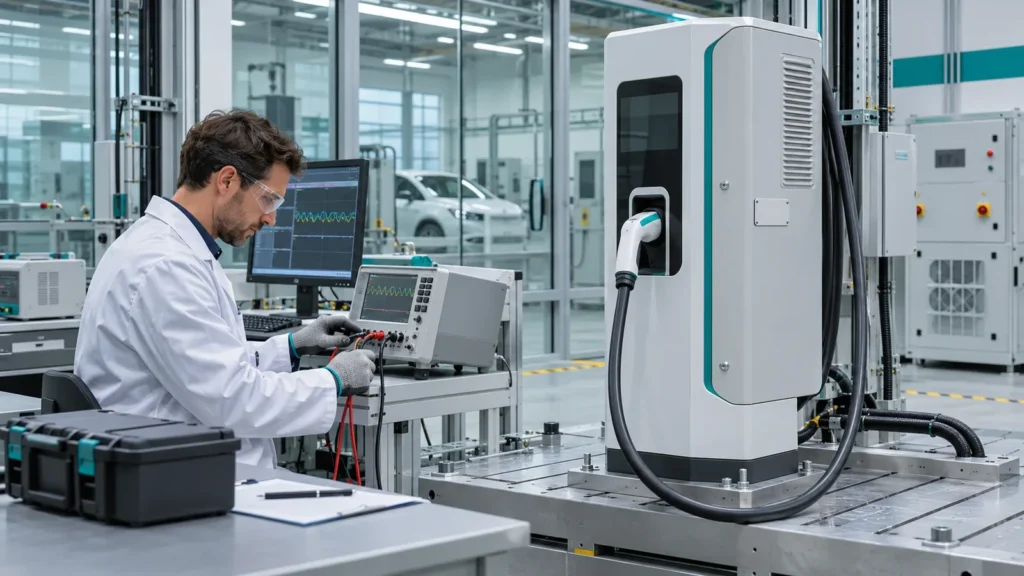
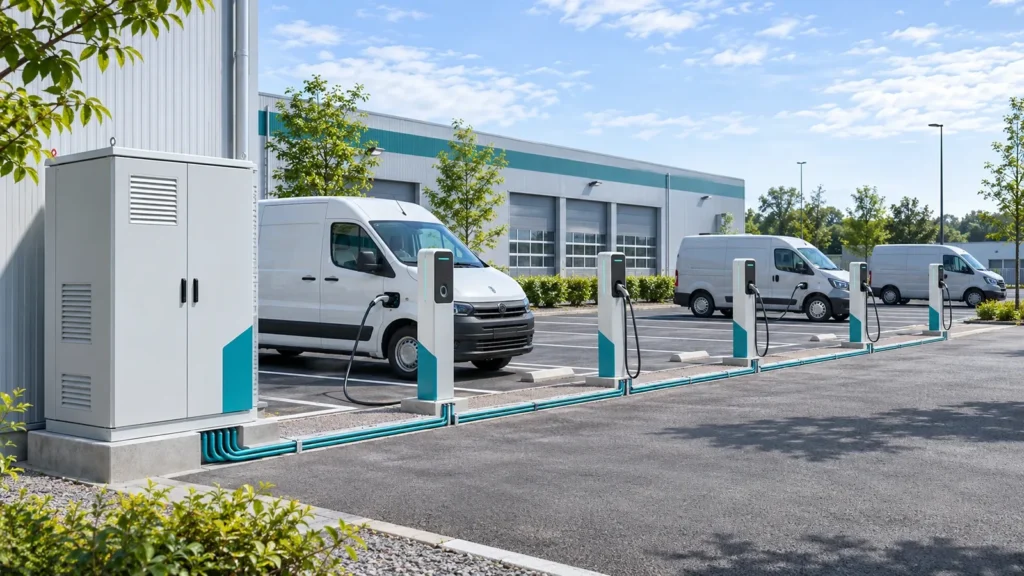
In short: a standalone charger has its own power electronics and a fixed maximum output. A distributed charging system puts the power electronics in one central cabinet and feeds several smaller dispensers, sharing the power between them as vehicles need it. On a site with a limited grid supply, distributed systems usually make better use of the available power, because capacity follows the vehicles that need it instead of sitting idle in empty bays.
When a site’s grid connection is limited, the way chargers are arranged matters as much as how many there are. There are two main approaches to DC charging: standalone chargers, and distributed systems with a shared power cabinet. Here is how they compare.
What is a standalone charger?
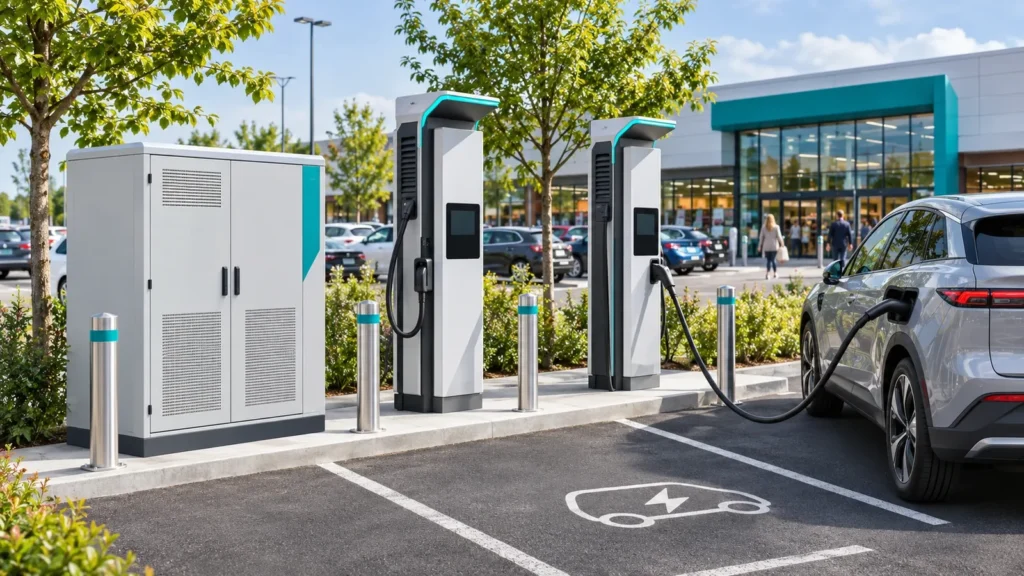
A standalone, or all-in-one, charger contains everything in one unit: the power electronics that convert AC to DC, the cable and connector, and the screen. Each charger has a fixed maximum output, and installing more chargers means adding more units, each with its own share of the grid connection.
Standalone chargers are simple to install and understand. If one fails, the others keep working.
What is a distributed charging system?
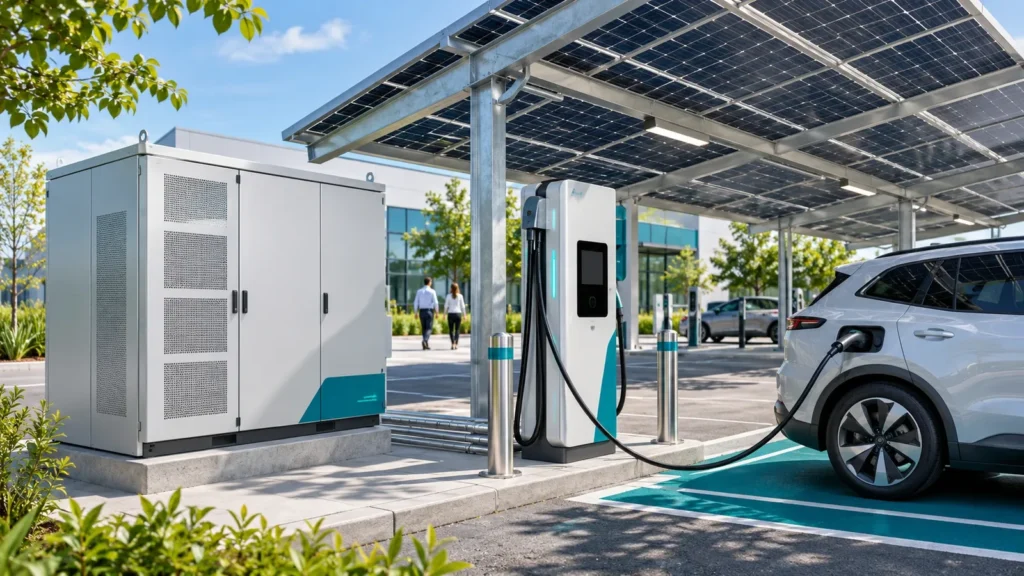
A distributed system splits the charger in two. A central power cabinet converts AC to DC, and slim dispensers in each bay deliver the power to the vehicle. Power is shared dynamically: when one vehicle needs less, the spare capacity goes to another.
As one example, Kempower describes separate power units that convert AC to DC and feed dispensers located up to 80 metres away, with a 450 kW or 600 kW power unit able to connect up to 12 charging plugs. Other manufacturers offer similar architectures with different specifications, so compare current datasheets.
Why does this matter on a lower grid supply?
Vehicles rarely all charge at full power at the same time. Batteries take less power as they fill, cars arrive at different times, and different models accept different maximum rates.
With standalone chargers, each unit’s capacity is fixed to its bay. If one bay is empty or a vehicle is nearly full, that capacity sits unused while another vehicle waits. With a distributed system, the cabinet is sized to the available grid supply, and the power goes to whichever vehicles can use it. The same connection serves more bays and delivers more energy overall.
Many standalone chargers also support load management across a site, which narrows the gap. The difference is that distributed systems are designed around sharing from the start.
How do they compare?
| Factor | Standalone chargers | Distributed system |
|---|---|---|
| Use of limited grid power | Capacity fixed per charger | Shared where it is needed |
| Cost per extra bay | A full charger each time | Often lower: add a dispenser |
| Space at the bay | Larger units | Slim dispensers; cabinet sits elsewhere |
| Single point of failure | Low: one fault affects one charger | Higher: a cabinet fault can affect several bays |
| Civil works | Simpler, local | Cable runs from cabinet to each dispenser |
| Scaling up | Add units and grid capacity | Add dispensers or power modules |
When does each one win?
- Distributed: sites with many bays and limited power, fleets where vehicles arrive in waves, and hubs that will grow in stages.
- Standalone: small sites with one to three chargers, places where long cable runs are impractical, and sites where independence between chargers matters most.
Can you add a battery?
Yes, and the two approaches combine well. A battery can feed extra power into a shared system at peak times, so the site delivers more than the grid connection alone allows. Our article on why battery-boosted charging matters explains how.
Questions to ask suppliers
- How is power allocated between bays, and in what steps?
- What happens to the dispensers if the cabinet or a power module fails?
- What is the maximum distance from cabinet to dispenser, and what cabling does it need?
- Can power modules be added later, and at what cost?
- Does the system support OCPP and work with your back office?
Our guides to EV charger requirements and writing a charger tender cover the wider specification.
Frequently asked questions
Is a distributed system slower for each driver?
When the site is busy, power is shared, so each vehicle may charge more slowly than its maximum. When it is quiet, a vehicle can receive more power than a fixed standalone unit of the same total size would give it.
Is it more expensive?
The cabinet is a larger upfront cost, but each extra bay is usually cheaper. Compare the total cost for the number of bays you need now and later.
What if the cabinet fails?
Several bays can be affected at once. Ask about modular designs that keep running at reduced power, and about repair times.
Choosing the right architecture for your grid connection is part of our solution recommendations service. Tell us about your site.