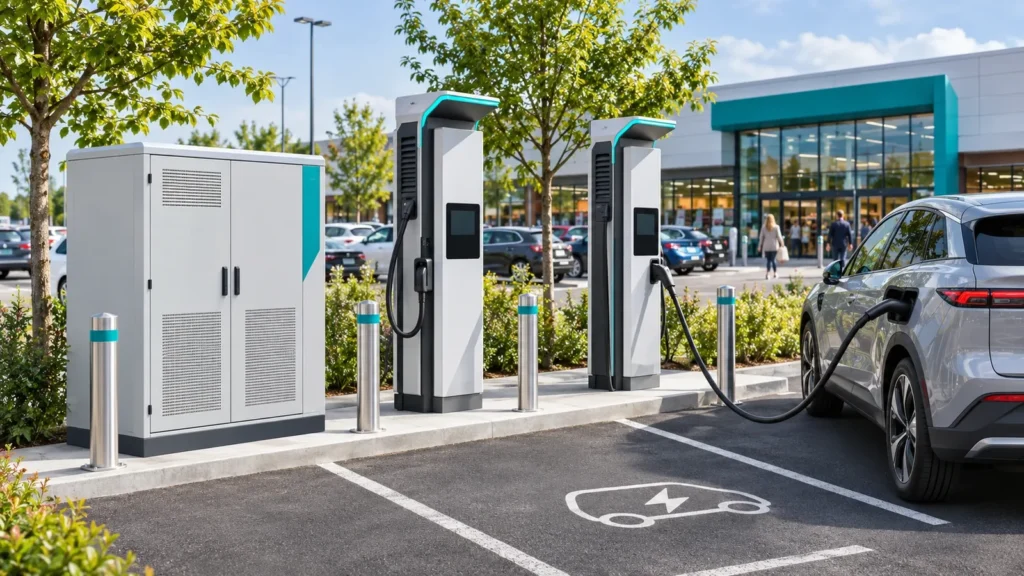

In short: the right EV charger starts with how it will be used: who charges, for how long, and how much energy they need. From there, check the power your site can supply, the connectors your vehicles use, the rules that apply, the software it runs, and the service behind it. Getting these right up front avoids the two most expensive mistakes: chargers that are too slow for the job, and chargers the grid cannot support.
Choosing an EV charger looks like a hardware decision. In practice it is a decision about vehicles, people and power. Here are the requirements we work through with clients before anyone compares price lists.
How will the charger be used?
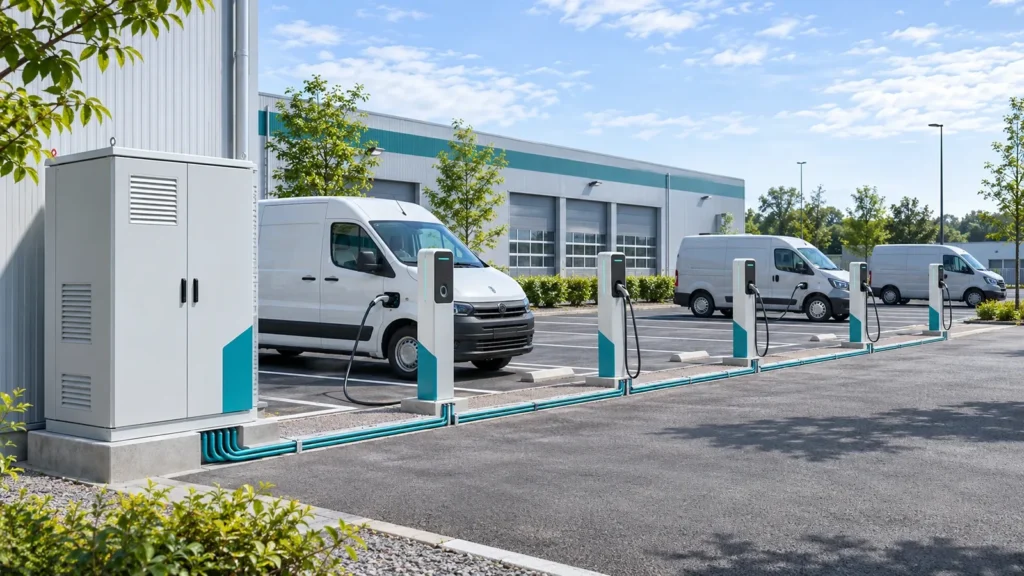
Start with dwell time: how long vehicles stay parked. A van parked overnight at a depot, a car at a workplace for eight hours and a driver stopping for 20 minutes on a long journey need very different chargers.
| Charger type | Typical use | Best when vehicles stay |
|---|---|---|
| AC charging | Homes, workplaces, depots, destinations | Several hours or overnight |
| DC rapid charging | Retail, hospitality, depot top-ups | Around 30 to 60 minutes |
| High-power DC charging | Motorway hubs, busy fleets, heavier vehicles | Short stops of minutes |
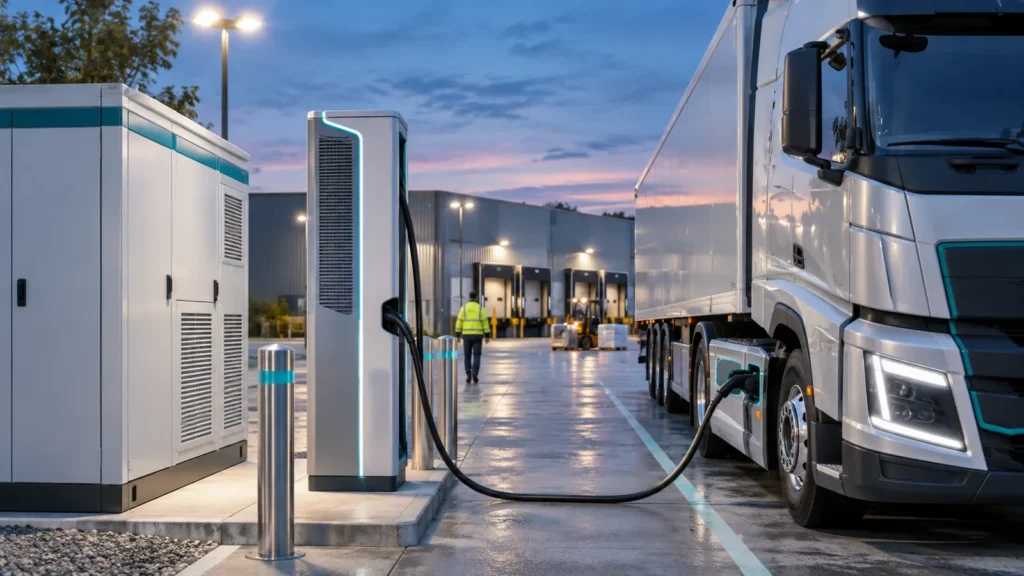
| Megawatt charging | Heavy goods vehicles on long routes | A driver’s statutory break |
Then estimate energy: how many vehicles charge each day, how far they travel, and when they arrive. That tells you how many charge points you need and at what power.
Can your site supply the power?
The grid connection is often the real constraint. Several rapid chargers can easily need more power than a site has available. Check your current supply and spare capacity before choosing hardware, and ask your network operator early if you will need more.
If the connection is limited, you have options: load management that shares power between chargers, a flexible connection, or battery storage. Our guide to storage as a grid workaround sets out the questions to ask first.
Which connectors do your vehicles use?
In the UK and Europe, most cars and vans use Type 2 for AC charging and CCS2 for DC rapid charging. Check the vehicles you run today and the ones you expect to buy. Heavy vehicles are moving to the Megawatt Charging System, a separate higher-power standard.
Which rules apply?
- Public charge points: the Public Charge Point Regulations 2023 require rapid public charge points (50 kW and above) to be reliable 99% of the time across an operator’s network, contactless payment on new public chargers of 8 kW or more, open data, and a free 24-hour staffed helpline.
- Private charge points: charge points sold in Great Britain for private use must meet the Smart Charge Points Regulations, including smart functionality, security requirements, default off-peak charging hours and a randomised delay.
- Installation: EV charging installations must meet the wiring regulations, BS 7671, published by the IET, which include specific requirements for EV charging.
- Accessibility: for public sites, PAS 1899:2022 from the British Standards Institution sets out how to make charge points accessible to disabled drivers, from bay layout to the height of screens and sockets.
What software will it run?
Chargers need a back-office system for access, pricing, payment and monitoring. Choose chargers that support OCPP, the open protocol that lets them work with any compliant back office. Ask for proof: the Open Charge Alliance runs an OCPP 2.0.1 certification programme with independent test laboratories, so you can check a product’s certificate yourself.
Who will keep it working?
Reliability depends as much on service as on hardware. In a 2025 survey of more than 200 UK charge point operators by Monta, just 4% reported average uptime of 99.5% or above. Ask suppliers for uptime evidence from similar sites, response and fix times, spares held in the UK, and remote monitoring. Our article on writing a charger tender covers how to put this in a contract.
Where will it live?
Think about weather, impact from vehicles, cable management, lighting, signage and space for maintenance. Outdoor chargers need suitable protection against water, dust and impact, and bays need room for vehicles to reach the cable without stretching it.
Requirements checklist
| Requirement | What to confirm |
|---|---|
| Use and dwell time | Who charges, when, and for how long |
| Energy demand | kWh per day and in the busiest hour |
| Grid capacity | Spare kW today, and the cost and time of more |
| Connectors | Type 2, CCS2 or MCS, now and in future |
| Regulations | Public or private rules, installation and accessibility standards |
| Software | OCPP certification, payment, data ownership |
| Service | Uptime evidence, fix times, spares and monitoring |
| Site conditions | Weather, impact protection, layout and access |
Frequently asked questions
How powerful a charger do I need?
Enough to deliver the energy your vehicles need in the time they are parked, and no more. Faster chargers cost more and need more grid capacity, so match power to dwell time.
Do the public charging rules apply to my depot?
They apply to public charge points. Chargers used only by your own fleet are generally outside their scope, but they remain a useful benchmark for reliability and support.
Should I future-proof with more power than I need now?
Often the better approach is to install the ducting and capacity for future chargers while buying only the chargers you need today.
Turning these requirements into the right solution for your site is what our solution recommendations service does. Tell us about your vehicles and site.