In short: a mobile EV charger can keep a fleet moving while a depot waits for its grid connection, and it suits events, recovery work and temporary sites. Judge it on usable energy per shift, continuous output, recharge time, connectors, how it is moved, and the service behind it. The peak power figure on the brochure is the least useful number on it.
More businesses are switching to electric vans than ever. Battery electric van registrations in the UK rose 36.2% in 2025 to a record 30,169, even as the overall van market fell 10.3%, according to SMMT figures reported by Motor Transport.
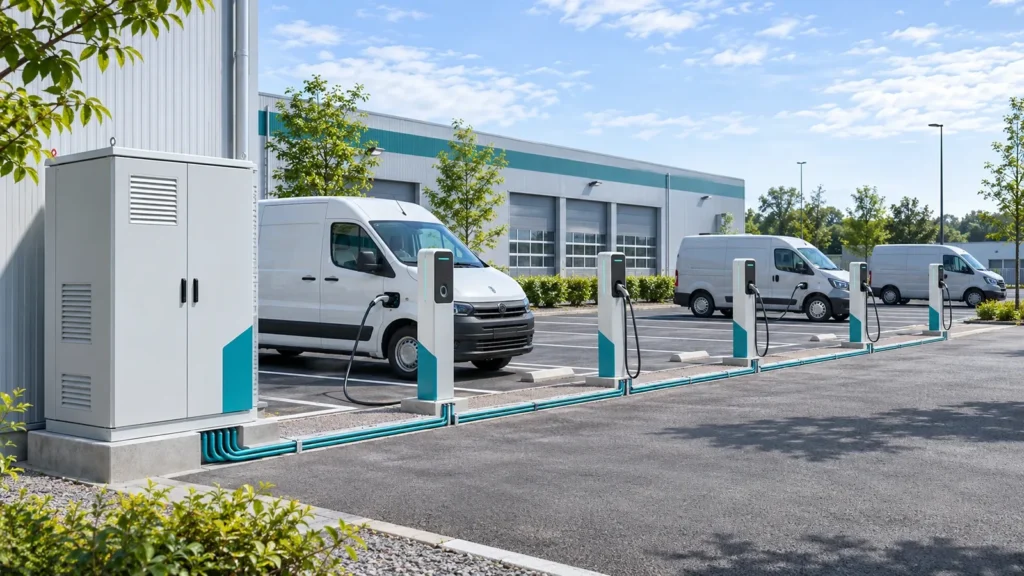
The vans often arrive long before the power does. The SMMT has warned that van and truck operators face waits of up to 15 years for depot grid connections. Mobile charging is one of the few ways to put vehicles to work in the meantime.
What is mobile EV charging?
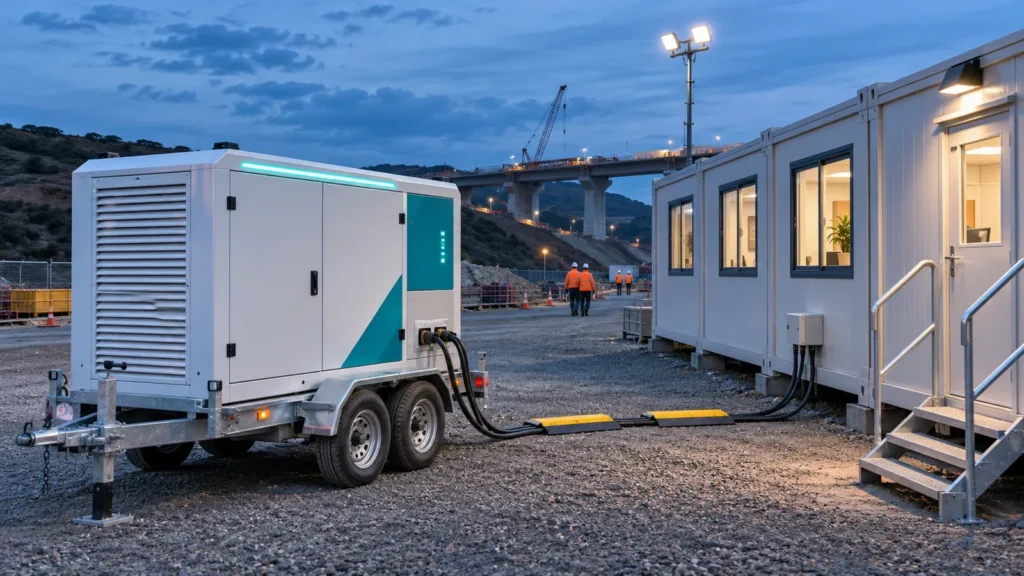
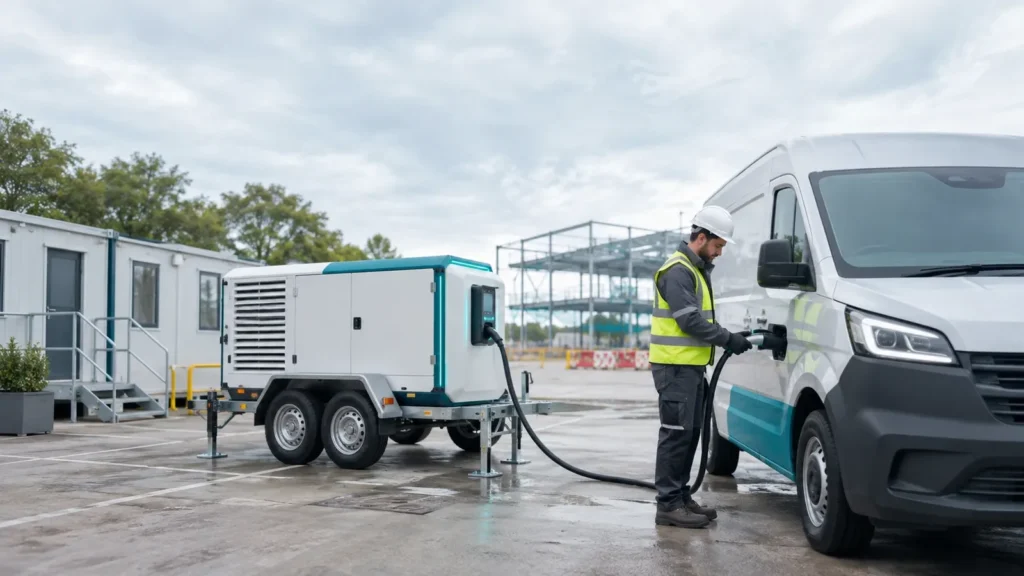
A mobile charger is a battery and charger on wheels: a trailer, a van-mounted unit or a skid that can be moved by forklift. It is charged up where power is available, then taken to where vehicles need it. Sizes vary widely. One manufacturer’s trailer range, listed by Tursan, runs from 30 kW with 30 kWh of storage up to 200 kW with 200 kWh.
The main uses are:
- Depots waiting for a grid connection or upgrade
- Events, film sets and festivals
- Roadside recovery of vehicles that have run flat
- Construction sites and other temporary locations
- Back-up when fixed chargers are out of action
Should you hire or buy?
Hire when the need has an end date: a depot waiting a known number of months for its connection, or a single event. Buy when the need recurs: regular events, a recovery service, or a pool of sites that take turns. Hire costs more per month but leaves you free when the grid arrives. Buying makes sense once you can keep the unit busy.
The six checks that matter
1. Usable energy per shift
The battery’s nameplate capacity is not what reaches your vehicles. Ask for usable energy, and for the losses between battery and vehicle. Then compare that with what your vehicles actually need in a shift.
2. Continuous output, not peak
A unit rated at a high peak may hold that output only briefly, or only with one vehicle connected. Ask what it delivers continuously, and how output is shared when two vehicles charge at once.
3. Recharge time and supply
An empty mobile charger is just a trailer. Find out how long it takes to refill, what supply it needs (a standard three-phase socket or a dedicated connection) and whether you have that supply where the unit will be parked.
4. Connectors and software
Check it has the connectors your vehicles use, typically CCS2 for rapid DC charging and Type 2 for AC in the UK. Ask whether it supports OCPP, the open protocol that lets chargers report to a back-office system, so its sessions appear alongside your fixed chargers.
5. Moving it
Batteries are heavy. Ask for the weight of the unit fully loaded and check who can tow it. GOV.UK guidance says drivers who passed their car test from 1 January 1997 can drive a car or van up to 3,500 kg maximum authorised mass towing a trailer of up to 3,500 kg. Larger units may need a different licence or a lorry. If the unit will move often, also ask the supplier how it handles the transport rules for large lithium batteries.
6. Service and support
Ask how quickly a failed unit is swapped, whether the supplier monitors it remotely, and what the battery warranty covers in years and cycles.
A worked example
Say ten vans each need 30 kWh overnight. That is 300 kWh a night, before losses.
- One 200 kWh unit cannot cover that on a single charge. You would need to refill it partway through the night, or add a second unit.
- If the depot already has a small supply, the mobile unit only needs to cover the shortfall. With 100 kWh available from the existing supply overnight, a 200 kWh unit could close the gap.
- If vans return in waves, the unit can charge the first wave while being topped up, then serve the second.
Run this sum with your own numbers before you speak to suppliers. It turns a vague enquiry into a clear specification.
Hire enquiry checklist
| Ask about | Why it matters |
|---|---|
| Usable kWh | Sets how many vehicles you can charge per refill |
| Continuous kW per connector | Sets how long each vehicle takes |
| Refill time and supply needed | Decides whether you can turn it round between shifts |
| Connectors and OCPP | Makes sure it works with your vehicles and systems |
| Laden weight and towing | Decides who can move it, and how |
| Swap-out time and monitoring | Protects your operation if it fails |
Frequently asked questions
Can a mobile charger replace a depot connection?
For a small fleet, temporarily, yes. For a large fleet over years, it is usually more expensive and more work than a permanent connection. Treat it as a bridge.
How is a mobile charger recharged?
Usually from a site supply or a fixed charging point. Some units can be charged from a generator, which defeats much of the purpose if the aim is lower emissions.
Is mobile charging only for vans?
No. Cars, site machinery and some heavier vehicles can use it, as long as the connectors and power suit the vehicle.
Choosing the right unit, or the right supplier, is the kind of decision our procurement and supplier selection service supports. Tell us about your fleet and we will help you size it.