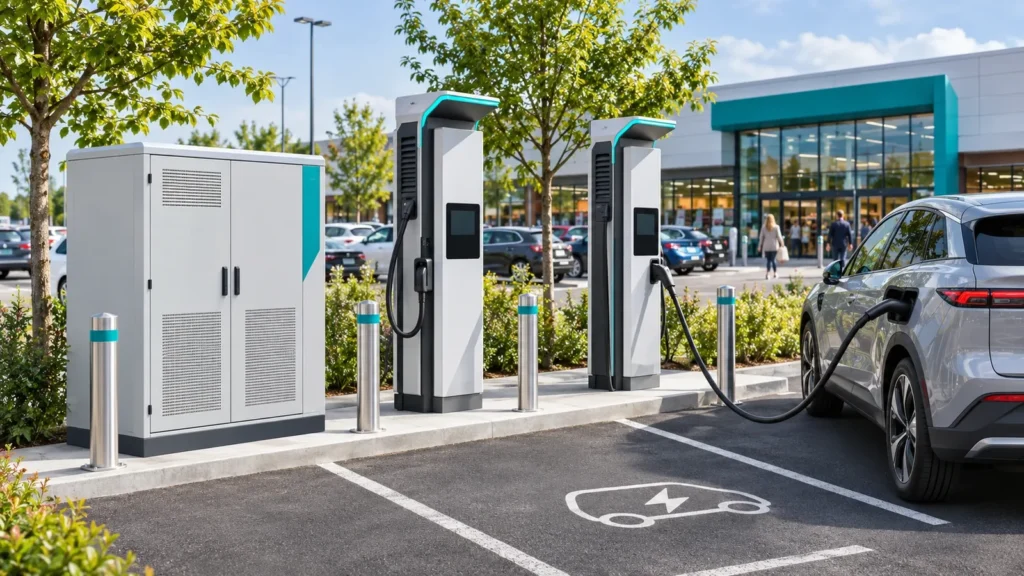
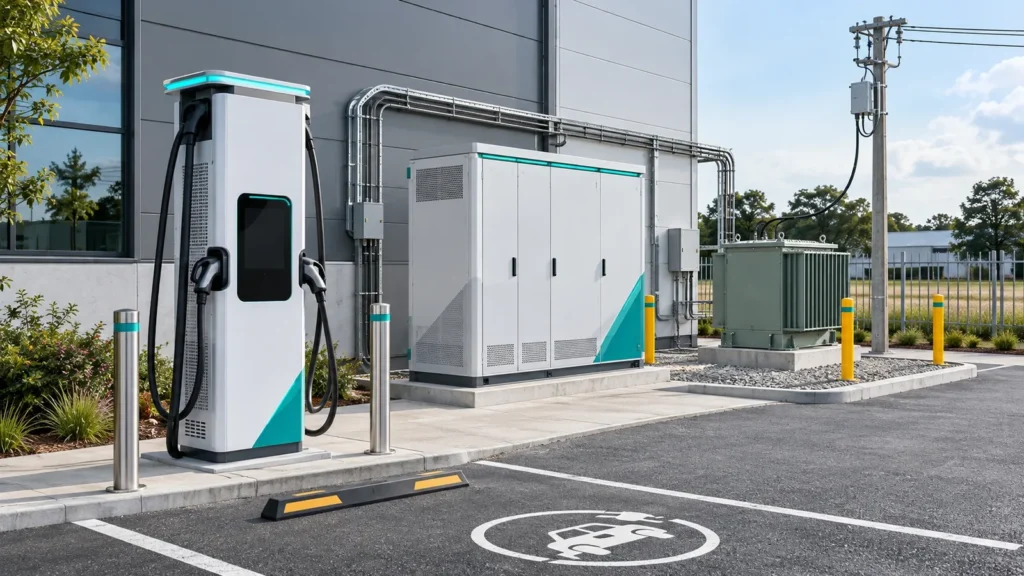
In short: a battery-integrated fast charger stores energy from a small grid connection and releases it quickly into vehicles. It makes sense when your site cannot get the connection it needs in time or at a sensible price, and when charging demand comes in peaks with quiet periods in between. It rarely makes sense when chargers run flat out for hours, or when a fast, affordable connection is already on offer.
Ask anyone planning a rapid charging site what slowed them down, and the answer is rarely the chargers. It is the grid connection. Electricity network operators in Great Britain have been working through one of the largest connection backlogs in Europe, and many sites simply cannot get the power they need on the timeline the business needs it.
Battery-integrated fast charging is one answer. It is not always the right one. This article sets out when it pays off, when it does not, and how to size it for your own site.
Why is the grid connection the bottleneck?
The queue for new connections in Great Britain grew so long that Ofgem and the system operator overhauled how it works. In late 2024, around 722 GW of projects were waiting in the connections queue, according to Solar Power Portal’s report on Ofgem’s reforms. By December 2025, Ofgem said the queue had been reduced by nearly two thirds as stalled projects were removed.
That reform helps, but local reinforcement still takes time. For fleets the problem is acute: the SMMT reported in May 2025 that van and truck operators face waits of up to 15 years for depot connections.
The size of the connection you ask for matters as much as the queue. In Devon, a new 10-bay charging hub reapplied for a more appropriately sized connection. Vattenfall reported that this cut the connection cost by over £1 million and brought energisation forward by three years. A smaller connection is often far quicker and cheaper to get. The question is how to deliver fast charging from it.
How does battery-integrated fast charging work?
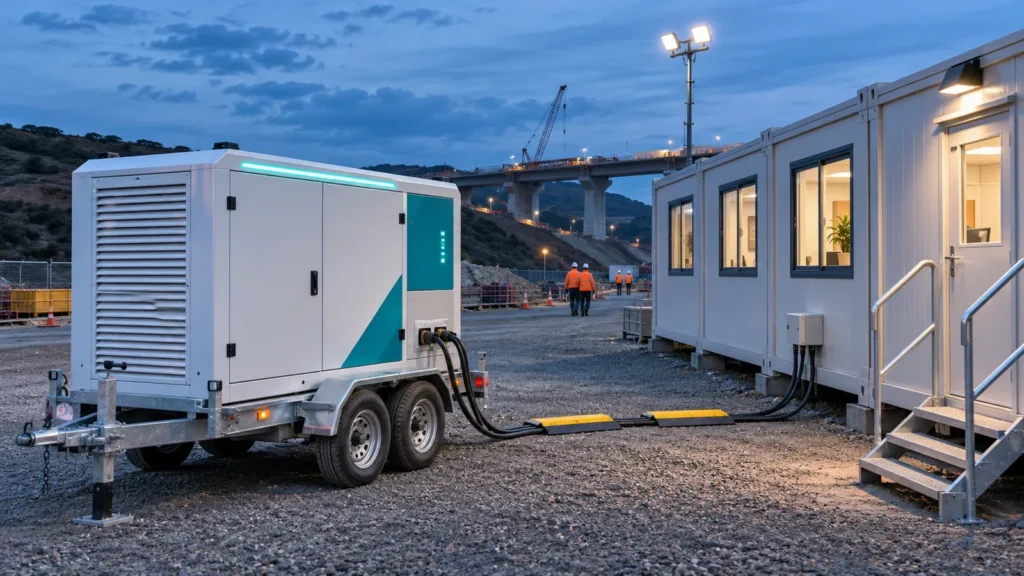
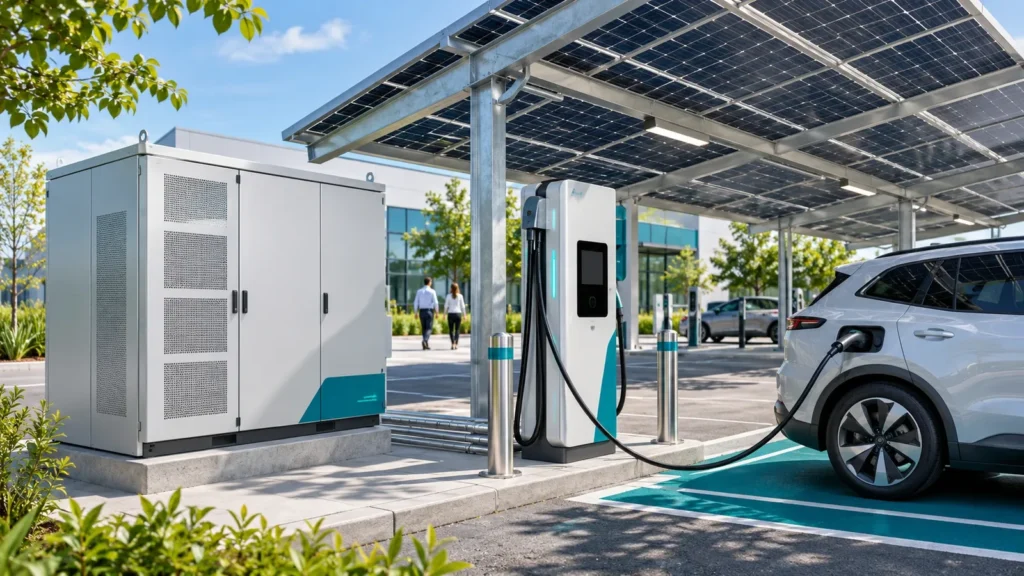
A battery-integrated charger, sometimes called a battery-buffered charger, has its own energy store. It draws a steady, modest amount of power from the grid and tops up its battery during quiet periods. When a vehicle plugs in, the charger delivers power from the battery and the grid together, at a rate the grid connection alone could never support.
The gap can be large. At one site in Würzburg, Germany, ADS-TEC Energy reports that its battery-based charger delivers up to 280 kW of charging power from just 50 kW of available grid capacity. That is the manufacturer’s figure for its own product, but it shows the principle: the battery turns a small, steady supply into short bursts of high power.
The catch is that the battery holds a finite amount of energy. Once it is empty, the charger can only deliver what the grid supplies. Everything depends on how much energy your vehicles need in your busiest period, and how long the battery has to refill before the next peak.
When does battery-integrated charging make sense?
In our experience, four conditions usually point towards a battery.
- The grid upgrade is slow or expensive. If the connection you need is years away or carries a large reinforcement cost, a battery can let you open on the connection you can get now.
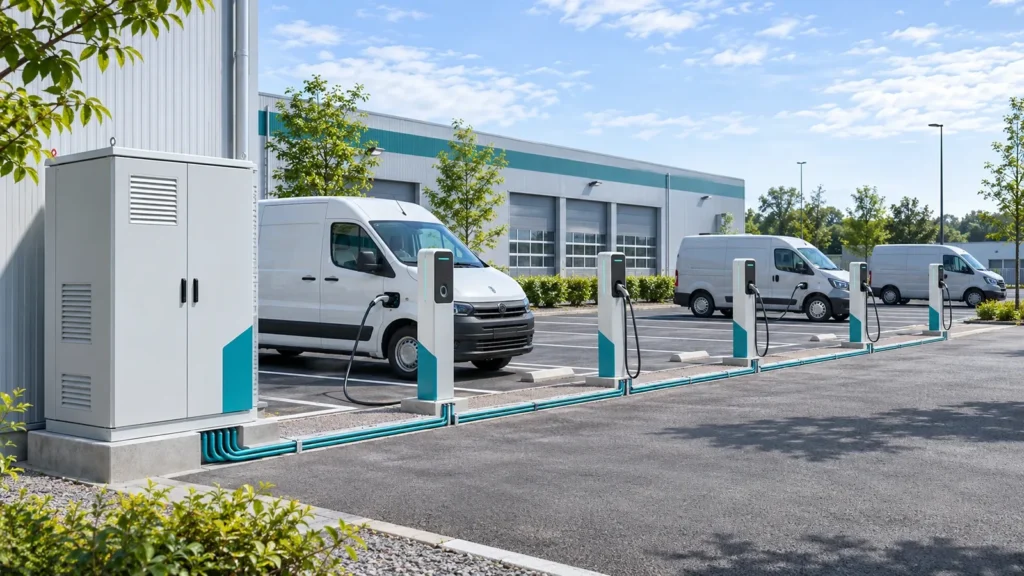
- Demand comes in peaks. Retail car parks, hospitality sites and depots with staggered shift returns often see bursts of charging with quiet periods between. Quiet periods are when the battery refills.
- You need to open before the upgrade arrives. A battery can bridge the gap, then stay on site to cut peak demand once the full connection is in place.
- The site will grow in phases. Starting with a smaller connection and adding storage lets you match investment to demand rather than paying for capacity up front.
When does it rarely make sense?
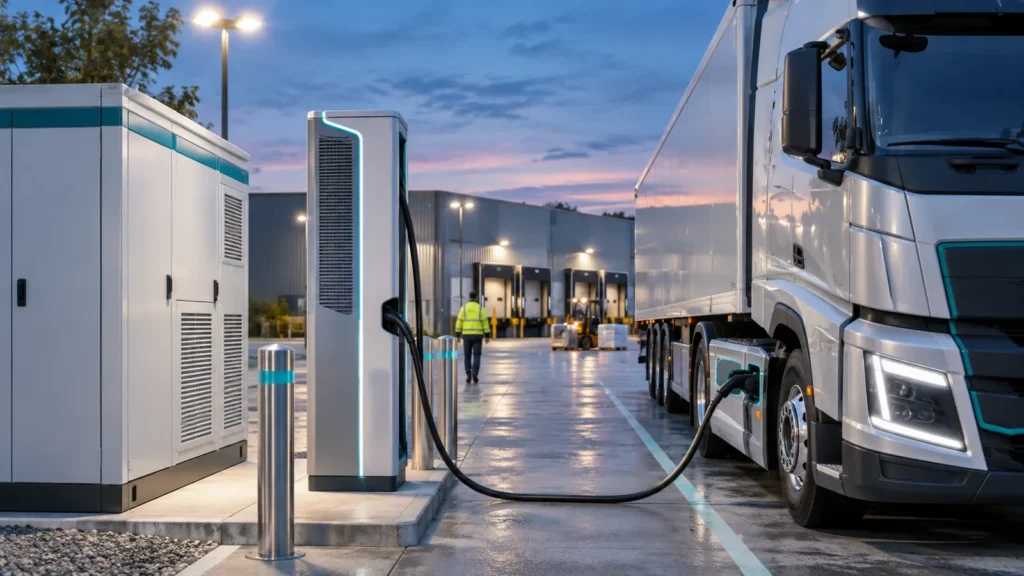
- Chargers run hard for hours. A busy motorway hub or a depot charging a large fleet back to back gives the battery no time to refill. Once it is drained, you are back to grid power only.
- A fast, affordable connection is available. If the network can connect you quickly at a fair price, a battery adds cost, maintenance and floor space for little gain.
How do you size the battery?
Start with your busiest hour, not your average day. Here is a simple worked example.
- In the busiest hour, six vehicles each take 40 kWh. That is 240 kWh of demand.
- The grid connection supplies 50 kW, so it delivers 50 kWh across that hour.
- The battery must supply the other 190 kWh, plus a margin so it never runs completely empty.
- Before the next peak, the battery needs to refill. At 50 kW, putting 190 kWh back takes nearly four hours, before allowing for charging losses.
If your next peak arrives sooner than that, you need more storage, a larger connection, or both. Run the same sum with your own data: half-hourly meter readings, charge session logs, or expected arrival patterns for your fleet.
What does the storage cost now?
Battery prices have fallen sharply. BloombergNEF’s 2025 survey found that battery pack prices for stationary storage dropped to $70 per kWh, 45% lower than in 2024. Across all uses, the average pack price fell 8% to a record low of $108 per kWh, and lithium iron phosphate (LFP) packs averaged $81 per kWh.
Those are pack prices, not the cost of a finished charger. Power electronics, enclosures, cooling, installation and software add a great deal. But cheaper cells have changed the payback on many sites that did not stack up a few years ago.
Checklist before you buy
| Question | What to find out |
|---|---|
| Peak-hour energy | kWh delivered in your busiest hour, from real data where possible |
| Grid supply | The kW you can get now, and when a larger connection could arrive |
| Refill window | Hours between peaks, and whether the battery can recharge in that time |
| Battery warranty | Years, cycles and the capacity guaranteed at end of warranty |
| Siting and safety | Footprint, ventilation, fire separation and any insurer requirements |
| Software | Open protocols such as OCPP, remote monitoring, and who owns the data |
Frequently asked questions
Is a battery-integrated charger the same as a charger plus separate battery storage?
The principle is the same. An integrated unit puts the battery and charger in one product, which is quicker to install. A separate battery can serve several chargers and other site loads, which suits larger sites.
Can the battery earn money as well as save it?
Sometimes. A battery can cut peak demand charges and, where the setup allows, take part in flexibility services. Treat any revenue as a bonus until it is confirmed for your site and network area.
How long does the battery last?
It depends on the chemistry, how deeply it cycles and how many cycles it does a day. Ask suppliers for a warranty stated in years and cycles, with a guaranteed capacity at the end.
If you are weighing up battery-integrated charging for a specific site, our solution recommendations service runs exactly this analysis. Tell us about your site and we will tell you plainly whether storage makes sense.